| Mickey Suman | April 2026 | Photo Essay |
On a rather uneventful and overcast July morning, I decide to walk to our dilapidated ancestral house. Only a few blocks from our present home, for reasons unknown and therefore seldom dissected, I never set foot inside the property after it was vacated by my cousins, its last inhabitants. Echoing a decade of abandonment, a loud stillness rings through the run-down premises. Converted into a storage for disputed and forsaken items over the years, the mute tokens of one-upmanship in a big family, it resembles a bona fide ghost house.
Dating back to the late 1960s, it is a traditional courtyard house with a tiled roof and an attic, flanked by rooms on all but one side that make up the compound wall. Now shrouded in obscurity, the house had once seen better days, witnessed several weddings and childbirths across generations. The first to fall were the rows of mast trees during the devastating 1999 Super Cyclone, their columnar, dark-green symmetry still etched neatly in my childhood nostalgia. Then followed the more predictable biddings of life—old age, cancer, repairs and extensions, and partition disputes punctuated by a collective hubris.
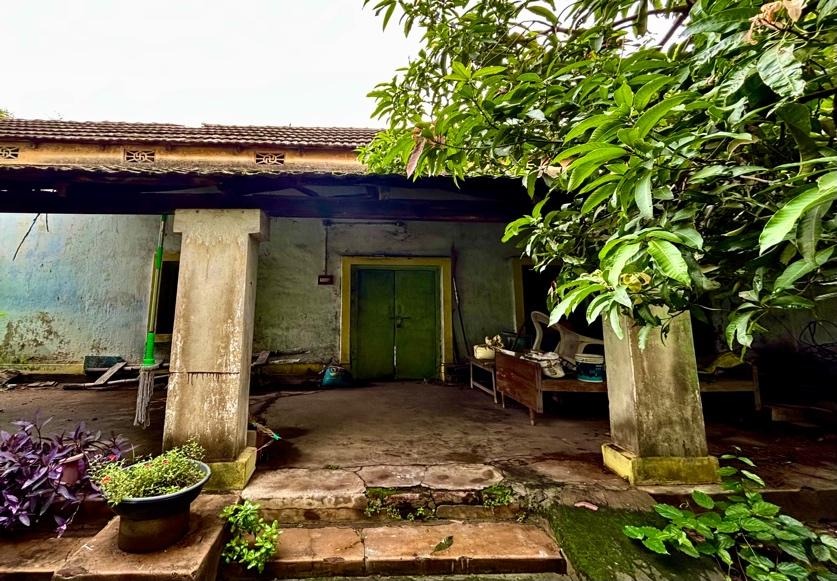
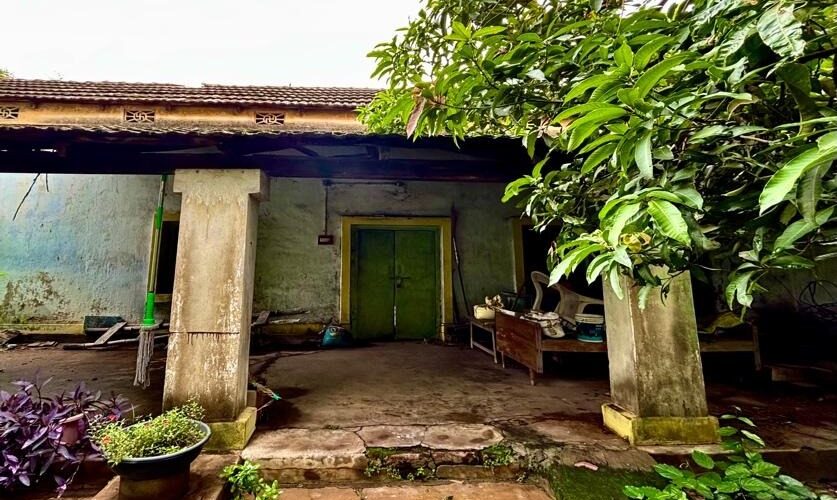
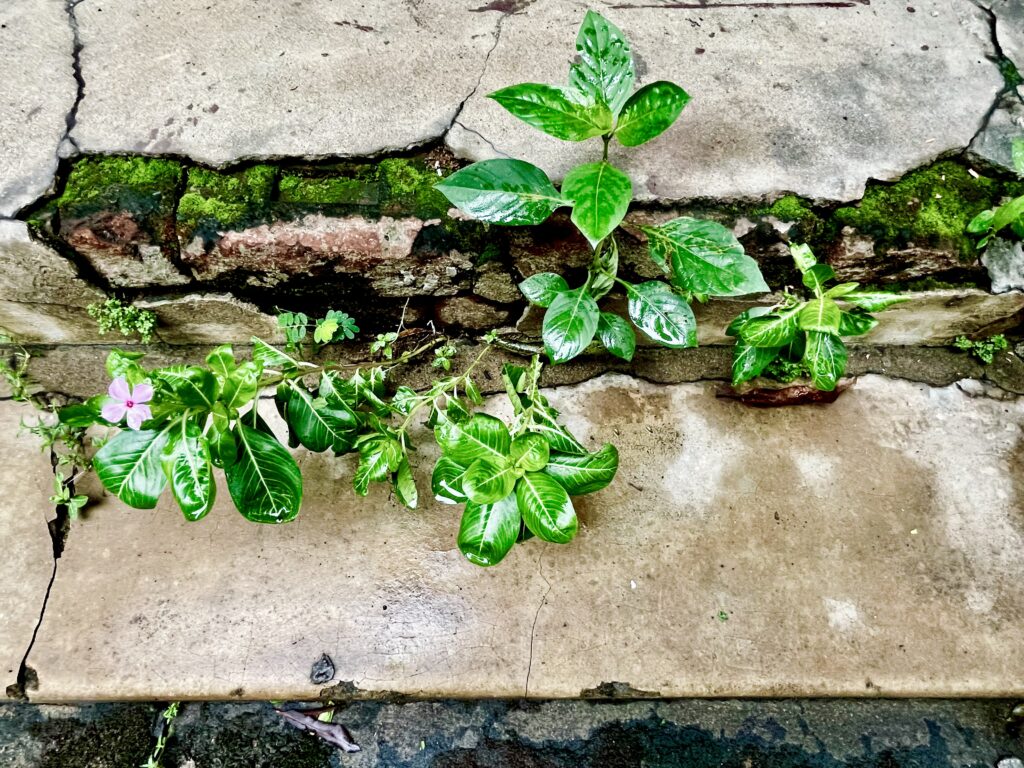
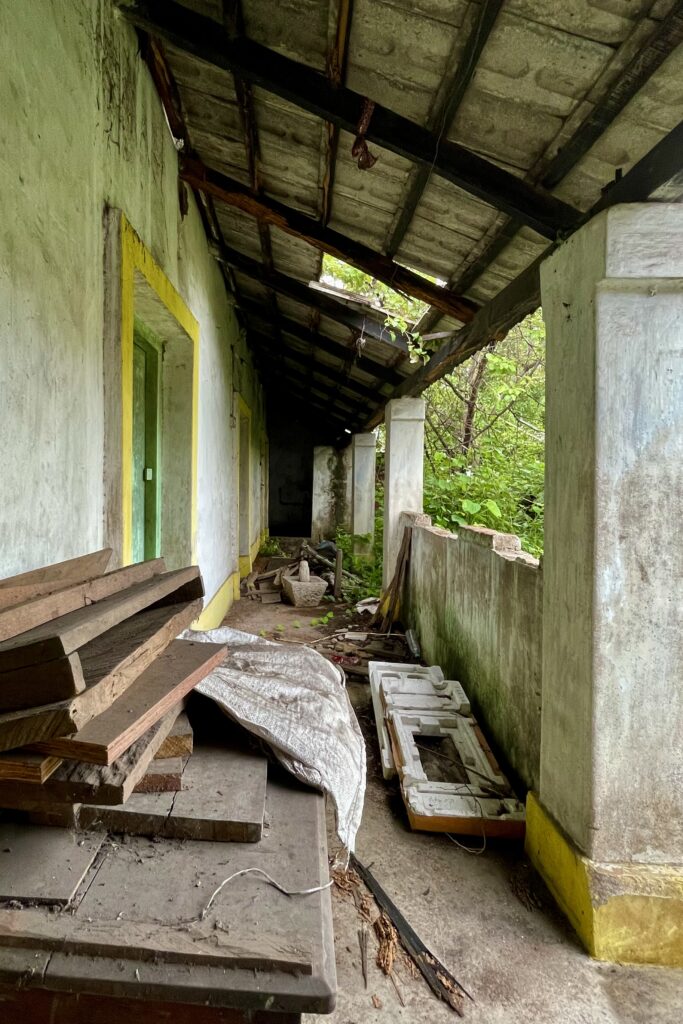
I survey the unkempt front yard while the humid monsoon air sticks to me much like the old faithful melancholy leached into the peeling facade of the house. A pink periwinkle looks up from the mossy crevices of the verandah steps, as if to question the purpose of my unwarranted visit. I travel back years in time when the yard was teeming with flowering plants, a tropical perfumery painstakingly curated by my father and his brothers. The memories that stand out the most in my mind are those of the jasmine and marigold groves, and a passionflower vine snaking around one of the verandah pillars.
As an aside, the poetic Odia name for passionflower—Radha tamala or Radha’s tree—incites an immeasurable pride in my mother tongue. Interestingly, in Hindi it is called Krishna kamal or Krishna’s lotus, and its mythological significance can be traced to the days of the Mahabharata.
When my grandmother was alive, she would, unfailingly, wake up at the crack of dawn every day. During the summer holidays, when she enjoyed the attendance and company of all her nine grandchildren, she would often send us on a special errand—to go flower picking, especially the freshly-bloomed jasmines, early in the morning. Almost sleepwalking in the dimly lit garden, my cousins and I would tiptoe on the ticklish, dew-laced grass, lest we commit the unforgivable crime of waking up any sleeping critters.
Later, when a fervid sun would wash over the large veranda, we would sit with grandmother and help her thread jasmine garlands for the daily puja. The smaller ones, usually strung with the budworm-infested flowers, were saved for our hair and tiny wrists.
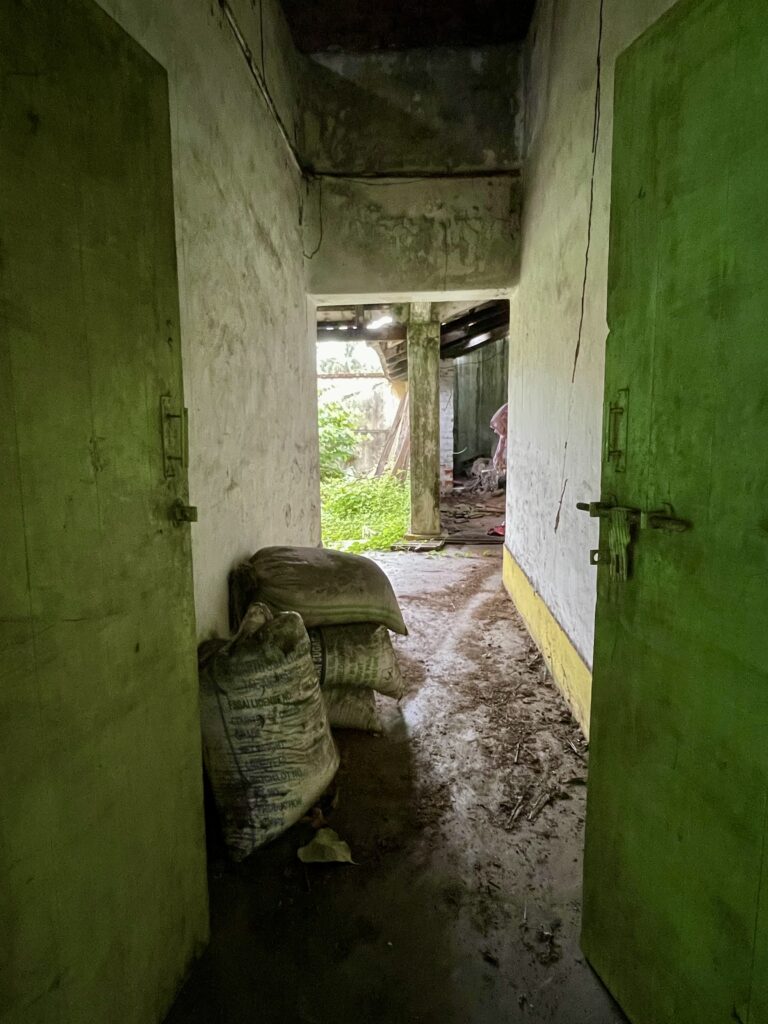
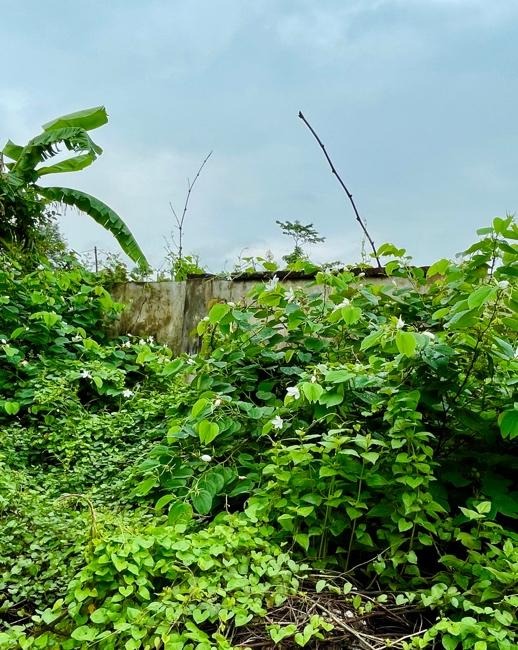
As I cross the verandah and walk through the moss-green doors, I gasp at the forest of weeds that has taken over the courtyard. It used to be our personal playground where many tireless rounds of hopscotch and antakshari were staged. My mother, who has accompanied me on the quest, sighs, “Just look at this jungle! They just let the place fall into ruins in front of their very eyes.” She washes her hands off the matter and, as always, tells it as it is. A blue butterfly flutters around us and lands softly on the peeling wall for a few seconds before taking off. A quick Visual Look Up on my phone says it’s a Himalayan Dark Oakblue.
The contrast is jarring, that of the vibrant, rain-washed green against the backdrop of concrete desolation. A few steps further, and I’m delighted to meet a white bauhinia flourishing rebelliously. The jujube tree that stands quietly in a corner still bears copious quantities of berries every winter. Its headstrong tendrils have trespassed their way through the broken tiles, staking their claim as one of the longstanding trees in the wilderness.

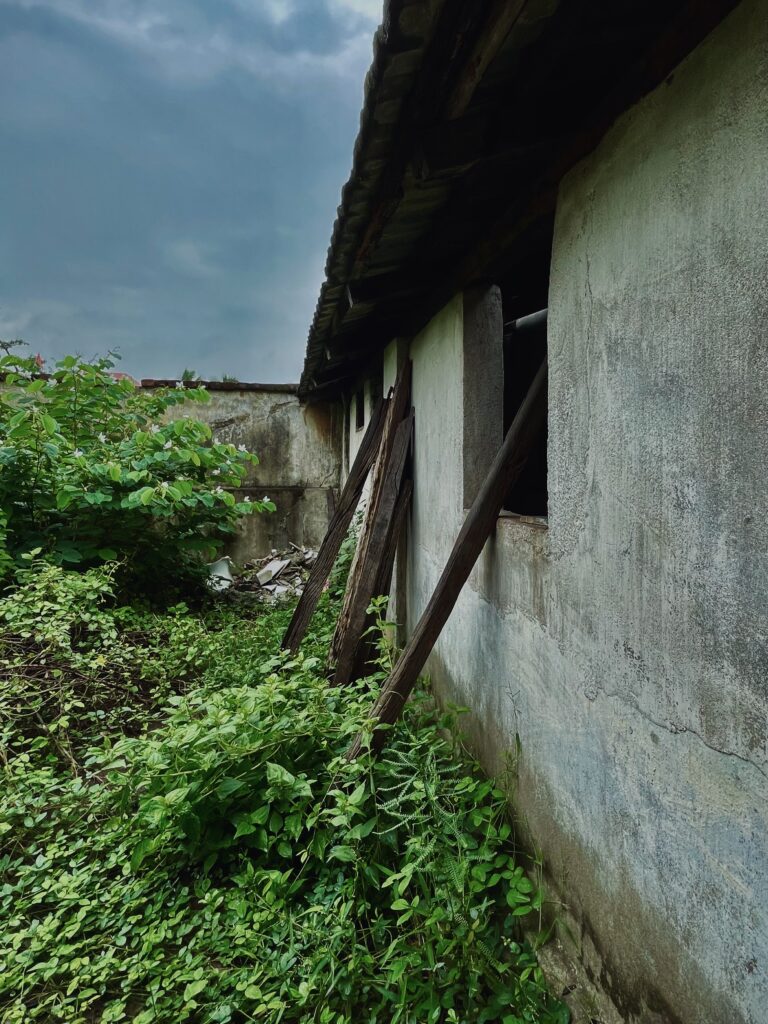
Nature seems to have taken over as the permanent rent-free occupant of this old house. I am instantly reminded of Mitch Albom’s timely words: “I think what you notice most when you haven’t been home in a while is how much the trees have grown around your memories.”
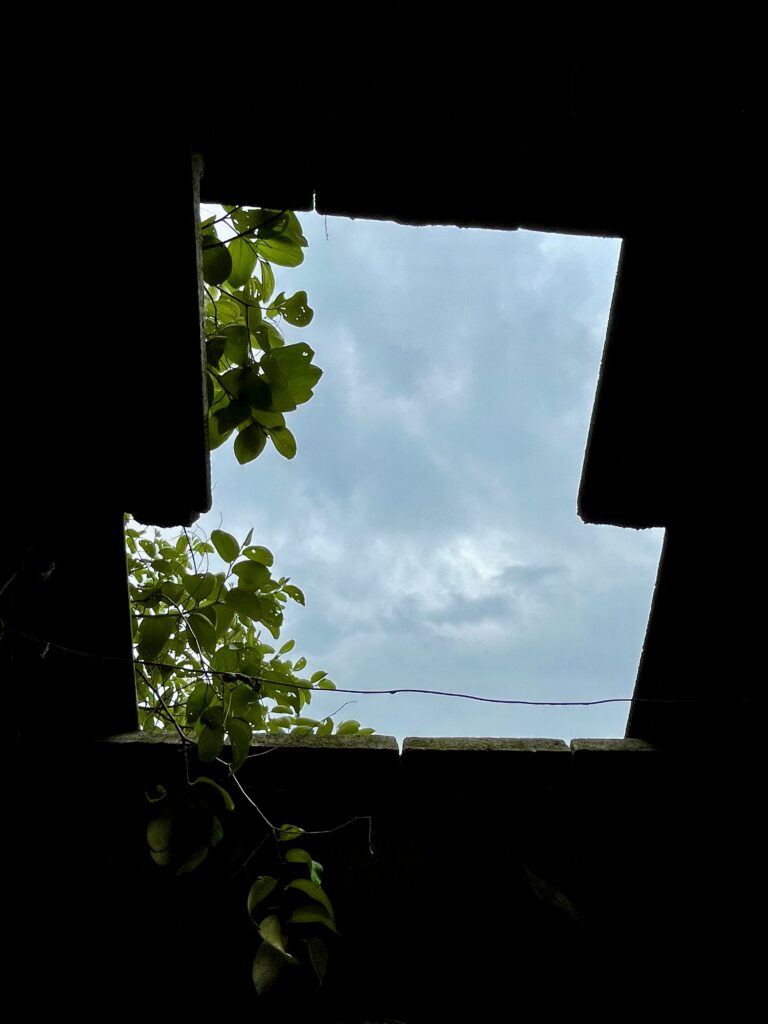
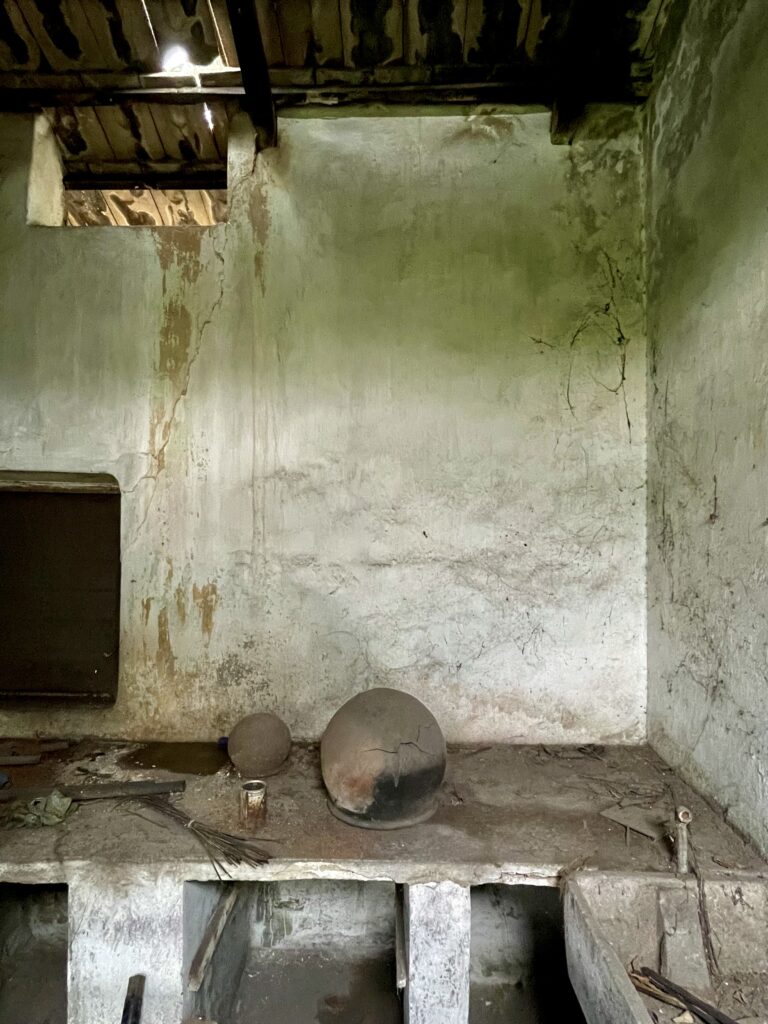
Attached to the courtyard, the open kitchen looks out to rumbling, grey skies that threaten to burst forth with a torrential downpour any moment. Embodying the age-old maxim “home is where the hearth is”, the kitchen was once the liveliest part of the house. Our days—mainly the summer holidays when the entire family would camp at the house over a fortnight—would unfold amidst the bustle of chopping, grinding, sizzling, and stirring. Everyone would gather around the dining area over morsels of hearty meals and lighthearted banter.
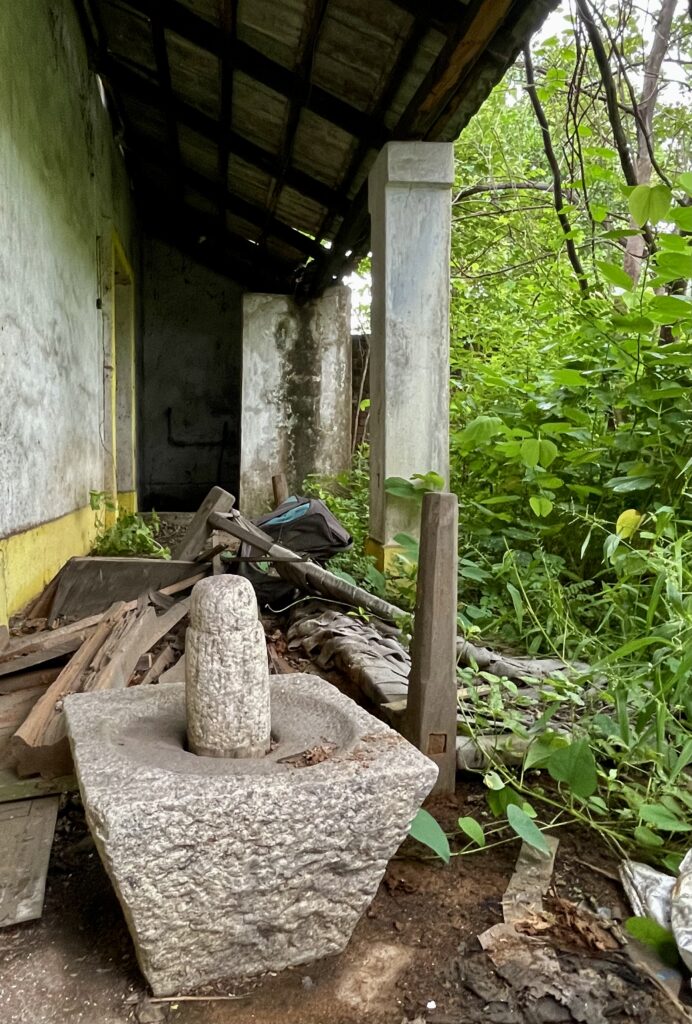
Sitting idle amidst the kitchen clutter is the traditional stone grinder, having long lost the modernity battle to its electronic counterpart. Made of white granite and weighing more than twenty kilos, it was probably too cumbersome and outmoded an inheritance to be bothered with. I picture my aunts and older cousins hunched around it, grinding load after load of soaked lentil and rice on the eves of festivals for the customary pitha. The jingle of their bangles while working the bulky granite pestle was a stamp of their effortless deftness.
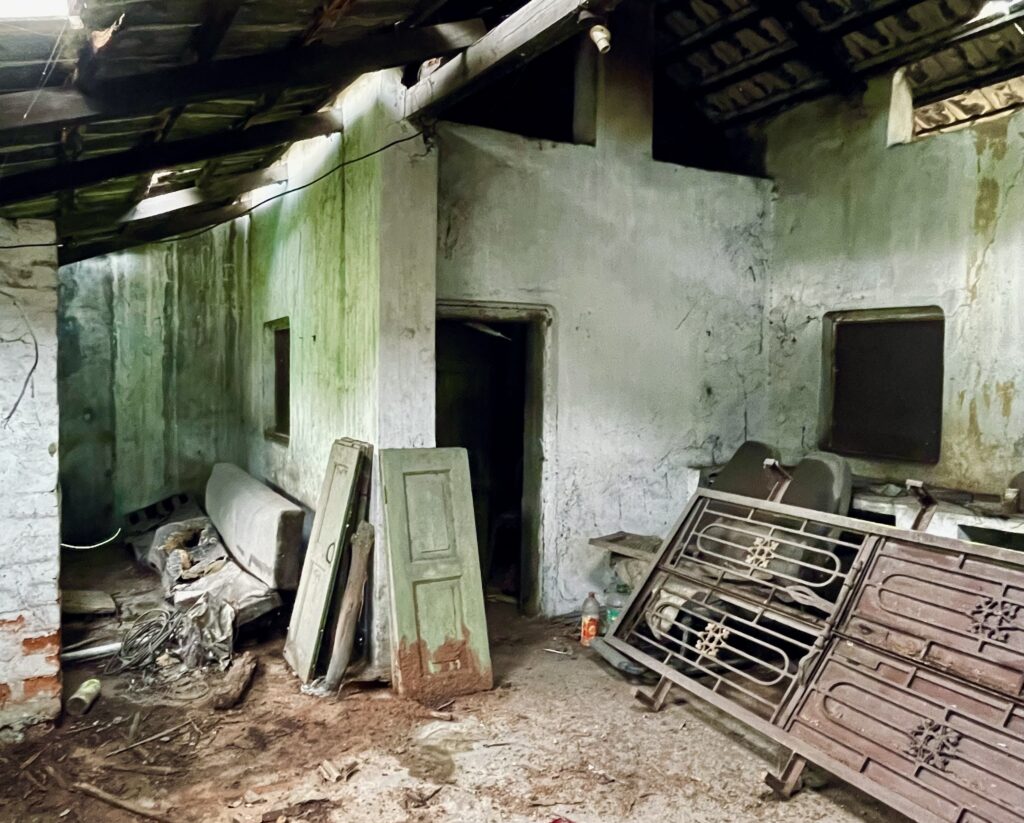
I head for the rooms, beginning with grandmother’s room simply because it is the biggest of all four. Expecting it to be filled with nothing but a musty silence, what I see startles me beyond words. An odd assortment of worn-down and unused items that have run out of their credibility fill the rooms: mothy sacks of paddy; rusty aluminum trunks cluttered with bric-a-brac; a battered couch with upholstery spilling out; uprooted frames of termite-infested doors and windows; and teakwood planks that have been claimed by friendly reptiles.
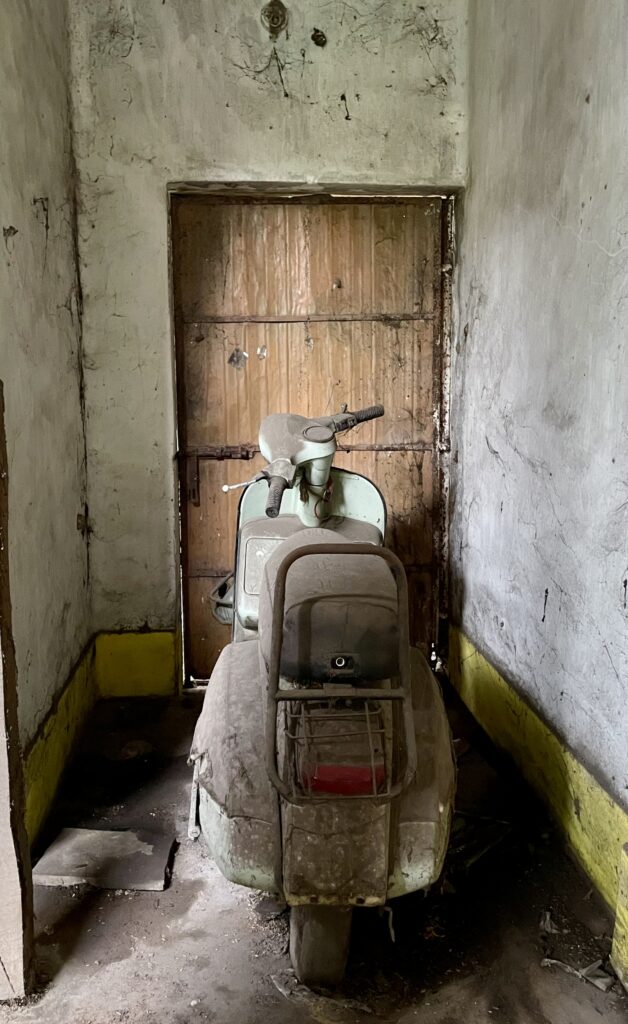
As Ma’s voice trails behind listing the names of the several snakes—dhamana, chitti, boda—they have encountered in the recent past, I catch sight of my youngest uncle’s Vespa scooter waiting by the back door. It stirs my elephantine memory significantly for I was its most regular pillion rider, frequently ferried by uncle to the ancestral home on countless weekends. With him gone too soon, the scooter lives on as a keepsake, a material remnant of his short yet momentous life.
In a world that is systemically falling apart, and societal collapse looms large, we are increasingly left with the silences of things that once shaped us. Suddenly, I feel both removed from these silences and a legit stakeholder in their imprints. The slanting floral patterns on the floor made by the afternoon light streaming through the window grille. The head-sized circles made by castor oil stains on the kitchen walls where grandmother would often lounge and supervise the meals. The faded axe marks on the coconut trees, courtesy of the most brattish cousin.
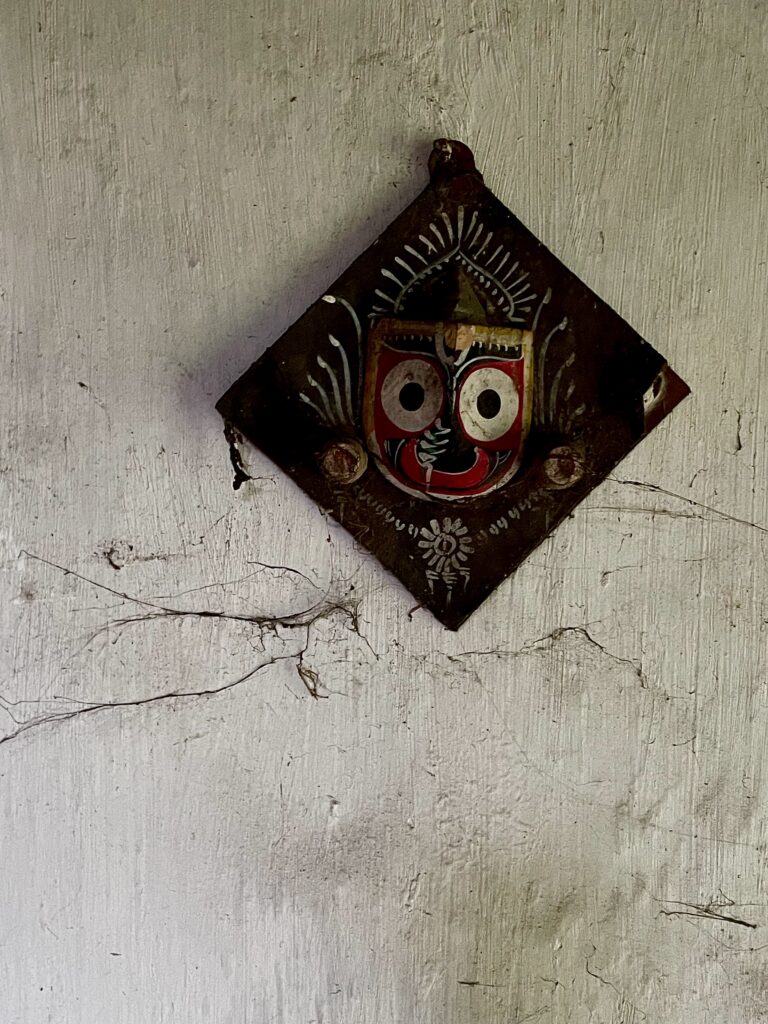
It is a strange education, writing about the dead. At times, it is like feeding words into their tightly shut mouths, gurgling with countless secrets. In the labyrinthine process of reminiscing, recollecting, and retelling one discovers new doors to understanding one’s ancestors. One begins to comprehend and even sympathize with their once unpopular choices and the quiet weight of everyday life they carried about them. The dead do not speak, for if they did, their songs would probably ricochet off the weathered walls of this decaying house. Instead, an ever-smiling God draped in cobwebs watches it all with vigilant, owlish eyes.
As I walk past the trees and arrive at the rickety metal gate, I feel a strange heaviness bearing down on me. While the house fades into the distance and the trees veil its facade partially, Arundhati Roy’s balmy words play on my mind: “And the air was full of Thoughts and Things to Say. But at times like these, only the Small Things are ever said. Big Things lurk unsaid inside.” And so, with my head filled with Things, I drag my feet back to the big human world. A mighty rain comes lashing down, blurring everything further.

_________________________

Mickey Suman is an independent editor and writer. Her work has previously appeared in Kitaab, Litro, Hammock and other literary publications. When not dabbling in the world of the written word, she enjoys conducting storytelling sessions for curious young listeners. Born and raised in Odisha, Mickey currently lives in Bangalore and is working on her first collection of short stories.
She can be found on Instagram @scatteredpoems_
_________________________
Find MeanPepperVine on Instagram @MeanPepperVine