
| Pranav Rohit Kasinath | April 2026 | Non Fiction Essay |
The trolley has a broken wheel that squeaks restlessly as I push it down the aisle. It spins independently – a bit of hair fouling its rusted roll – listing to one side as I shuffle through the dimly lit ward. Blood culture sets are stacked in a pyramid that teeters precariously; the muffled clanking of the sterilised bowls a herald of my approach.
Switch on the light – counsel – prep the groin – stab, swab, pressure – move on. 8 cultures. 15 to 20 minutes each.
“Empathy” lies at the core of our training for a reason – healing often involves a degree of suffering. The suffering can be physical – the act of drawing blood; or it can be psychological – communicating bad news. The knowledge we communicate changes lives – incurable disease, psychiatric illness, or the death of a loved one. We are taught to pitch our voice and demeanour to cast a visual and aural blanket of comfort – to explain, counsel, and warm our hands before we palpate abdomens as a barrier to the harsh realities we expose our patients to.
Above all else, we are expected to care.
I drive the pitiless needle into the groin or arm, shredding nerves, aiming for the vein beneath. All I care about is the surge of blood in the syringe, the satisfying backward slide of the plunger. Some patients whimper, some clench their bedclothes, most of them scream. I fill my bottles and move on – often without a word – sometimes with a cold clinical plea for silence, my tone scraping the edge of an abyss of anger.
To care is to slow down, ignoring the worklist flapping ominously on the noticeboard. To care is to forget, for a while, that it is 2 AM and your third consecutive day without adequate sleep. To care is to quell your juddering heartbeat, neglect your grainy eyes and aching calves, quiet the panicked voice in your head that remembers the needle stick injury you received this morning.
Did I finish those cultures? I must have – but I do not remember. Memory goes blank – shifting to stuttering static. It starts up again with a violent banging on my door – each paint-flaking shudder rippling through my consciousness – rocketing me to the surface of awareness. I wake up gasping, jittery, scared – no – terrified. I have overslept. My resident stands outside my room – angry at being burdened with an incompetent intern.
I dreaded being that intern. The one spoken of in whispers, his shoddy work ethic prophesying his future failure as a physician. Over meals, our lanyards tucked into our shirt pockets, we discussed – in condescending tones – those interns who didn’t work, took off and doubled everyone else’s work: the ones who were unreliable.
We wanted to be the ones called on in a crisis – trusty sentinels of the ward – armed and ready with information; rattling off haemoglobin values from memory, organised and neat, rolls of micropore, markers, pens and sample tubes squirreled away in pouches – gunslingers on a mission.
Everyone talked of heroic rescues, last-minute samples and covering for residents. Having no such stories to share, I felt clumsy and awkward. I considered myself lucky if I reached the ward on time or finished a worklist without forgetting crucial details. I checked and rechecked my lists, convinced of my incompetence. I left my illusions of brilliance behind me and committed to showing up, gritting my teeth and getting the job done – whatever that entailed.
I inhabited a twilight zone of sleep deprivation, physical exhaustion, and mental panic.
I was burning out.
Repeat a word or a fact enough times, and it loses traction, slipping off the surface of the brain – a tire tread worn smooth by endless friction – hashtags on social media, think pieces in the papers, or whispered conversations in HR. The reality of burnout is an inconvenient truth – that the doctors treating you, caring for you and ensuring your safety are often struggling to stay afloat, fighting tidal waves of exhaustion coupled with a fast-cracking sense of self.
Hashtags cannot convey the feeling of wading through the exhausted waters of burnout. It weaves together irregular meals, leaden feet, and anxiety, creating a world in which the air shimmers with the promise of sleep – always denied. Bitter coffee – the dregs of beans reused endlessly – keeps you afloat – until you crash – only to drag yourself to the vendor for another cup, generous with the sugar to mask its bitterness, a saccharine coffee sludge lying thick at the bottom. Heart racing, eyes drooping – the certain knowledge that if you stop and sit down, getting back up will be the hardest thing you will ever do. So, you drink another coffee. Another. Another.
The wheel lists to the side, the trolley wobbles, tilts.
Chaotic admission day. The ward is submerged under a tidal wave of patients and their attenders eyeing hard-won beds, praying for discharges – waiting for admission. The central corridor is packed with patients on oxygen, nebulisers rattle in the background, dulling the beeping of the monitors, fumes escaping from the sides of the masks. The summer heat thickens with the sweat of the crowd.
A thousand skeins tangled in my hands. Worklist, indecision, paralysis. Where do I start? Ticking clock edging towards midnight – the hope of sleep disappearing with each beat. I start gathering threads and work my way through them. Getting things done. The night gradually paints itself into a blur.
A patient’s attendant stops me as I am heading for the nursing station.
“We’ve been waiting for two hours,” he says, blocking my path. My thoughts – tangled – try to work their way to some form of coherence, and shudder to a jarring halt. I feel angry: the jerk back to reality is unwelcome.
I frown, try to focus. I do not know which patient this is, and in that moment, I do not care. Everyone is waiting. I have a worklist to complete, samples to send…I look at the clock, my window of sleep being nibbled away.
“Just wait; you will get a bed – it takes a while,” I say through clenched teeth. I can feel the anger coiling inside me, its subliminal rattle. I try to slide past.
“It’s two hours, when will we get a bed, how LONG do we have to WAIT?” He pushes his face close to mine, angry.
“YOU WILL GET A BED WHEN ONE IS FREE – DO YOU UNDERSTAND?”
I realise I am screaming only after the words are out of my mouth, when I see the man’s face cave in, his belligerence gone in an instant. I push past him and go about my work. The night is swift, brutal, sleepless – it melts into the rest of my internship, a long continuum of exhaustion.
I think about this encounter every other week.
I think about it when a patient asks me an uncomfortable question, I think about it when I am exhausted, drained and on my last legs, I think about it when I feel my voice going hard in a difficult interaction – clipping my words, enunciating, slowing down my speech, trying to control the anger that blazes inside me, venting it safely, professionally. I think about it, and I think – never again.
It was an easy resolution to follow – for a while. The STOP sign of shame loomed large in my mind at every hint of anger and frustration – and I stopped, checked myself, managing to rein in my temper. Gradually, it asked more of me. Resolutions are fuel for a healthy mind. A mind fractured and dependent on caffeine to function felt burdened – it had no resources to call on. To stay true to it, I was dipping into the well of my self, running empty, the bucket scraping bedrock.
Avoidance became the safer alternative.
What is the “art” of medicine? Is it physical diagnosis – making arcane prognostications based on pulse volume, murmur and gestalt phenomena? Is it being proficient in procedures – the smooth flow of spinal fluid on your first attempt, the graceful slide of an i.v into an invisible vein? I think it is something simpler, more elemental – locking eyes with a patient on a first meeting; establishing a connection that says “I see you, I see your pain, I am here to help,” – making them feel welcome in your world.
Doctors are an oasis of understanding in the midst of a life rapidly spiralling out of control. I walked into my internship an empathetic doctor, idealistic and willing to give as much of myself as was required – but I walked out as someone different.
I stopped looking at patients. My posture changed, my expression grew closed – I guarded my eyesight, tilting away to avoid contact. I walked past patients in the ward, not looking at them, worried I would be drawn into their concerns. I opened our interactions with coldness, signalling emotional unavailability despite my professional presence. I walked faster, faster and faster – forgetting names and replacing all patients with an indistinguishable smear of stereotype. I was on the treadmill now, engaged in the joyless act of putting one foot in front of another – legs aching, heels thudding – making the best of a profession I was now convinced I was not cut out for. The well kept emptying itself, my foundations weakening.
On one particularly unpleasant day, I walked out of the ward, up the stairs to my room. My roommate looked on in bewilderment as I picked up my metal tiffin carrier and hurled it against the wall. It exploded in a shower of dal, roti, curry, and stainless steel – spilling over the dusty floor of our room. I sat myself down, surrounded by curry stains, muttering endlessly to myself. I do not remember how long I sat there with the blurred image of my anxious roommate in the periphery of my vision. I gradually snapped out of my fugue state, apologised for the mess, and got right back to work.
I started seeking solitude. I would pause on my way from ward to OPD in a silent corner of the hospital and just breathe, hoping the duty mobile would not explode in my hand and interrupt the ever-widening gyre of my thoughts. I remember other places of solitary refuge – the terrace of the Intern’s Hostel, solitary meals at the restaurant across the road. I replaced my emptiness with food – butter, sugar, packs of milkshake and late-night brownies oozing with chocolate, the dopamine rendering my mind stable enough to deal with the next crisis.
Another day. I stand in a dim connecting corridor. No patients, no demanding residents. Darkness interrupted by slanting bars of sunlight. I look out of a window at what seems like – from my vantage – an abandoned courtyard; its tiles hidden by trees.
Quiet.
I rest my head against the sill.
Quiet.
“Are you ok?”
I turn around – heart racing.
A medicine consultant stands there, concern on her face.
“Is everything all right?” she asks again
“I… uh…Yes. Yes, Ma’am – I was just taking a break.” I flash a smile.
“Are you sure?”
“Yes, Ma’am – I’m fine.”
She looks at me for a moment and goes on her way. She turns back again.
“Are you sure you are alright?”
“Yes Ma’am.” I widen my smile with an effort.
Our identities in medicine are our metaphorical white coats. Identity preserves hierarchy – it slots you into a rung of the ladder – the lowly intern, the harassed resident, the relieved junior consultant and the self-assured professor. These identities become things you strive for – cherished and valued because each is hard won – entailing years of physical and emotional suffering, toil and insecurity. You grow in this profession by burying your past selves in the tomb of your mind, your throne sitting resplendent on the bones of buried hopes and impossible dreams, alone, unassailable.
The identity you can never really inhabit, the one you spend all your years of training denying, is your own humanity.
What I felt in that corridor was not healing, it was not epiphany – it was shame. I spent a few days wondering if I looked weepy and pathetic. I felt ashamed of how transparent I had been to a passerby, convinced that my weakness was writ large on my face. Were the cracks in my identity visible for everyone to see? Was I being labelled “unreliable” that very moment?
In hindsight I realise I had been given permission to be human for a while. My distress provoked empathy – perhaps my distress was valid? Maybe someone would understand? Perhaps I was not alone? It is possible this balm percolated into some protected layer of my mind, a depth deeper than the well that was emptying itself, waiting to trigger some tentative steps towards seeking help.
It is easy and clean to shape narrative with a definite moment of realisation – the click of a mechanism slotting into place, powering life’s engine forward. That is almost never the case. My first step towards healing was taken close to two years later when I got up from my bed one afternoon and went to see a psychiatrist.
Recovery. In films, we usually see a montage – the protagonist gliding effortlessly from realisation to self-actualisation to permanent happiness. What this shiny montage obscures is the fragmenting of identity that “recovery” entails. It is a process of looking into yourself, the ways in which you interact with the world, your expectations and hopes and understanding that so many of them are misplaced, naïve, or out of touch with reality. It means shame – repeated shame.
“I am burnt out” or “I need help” does not equate to recovery. The truth does not set you free. It gives you a direction, and tells you to walk a difficult road. It also does not mean one stops working. Our job asks a lot of us, even when we are healing; we become patients wearing the guise of doctors.
I needed space to heal while I worked, and I found it in Anaesthesiology.
Anaesthesiology is not an easy field. It is often characterised by crushing defeat and sometimes a forbidding wall that your skills are insufficient to scale. To be an anaesthesiologist is to be humbled repeatedly. It requires deep knowledge and an ego willing to be pummelled to the point of submission. I lacked the former, but had excellent experience in the latter. I took the plunge and began to find a way back to myself.
In anaesthesia I found calm. The focus on one patient at a time – the long hours of monitoring and optimisation. Being alone with your thoughts, the beep of the monitor a calming punctuation to your internal monologue. Being alone, period – often cut off from peers and colleagues for long hours.
Anaesthesia also asked a lot of me. Precision in procedures, in assessing the risks my patient would have to undertake in the perioperative period; alertness – to the dipping tone of the pulse, the rapid respiration in the preoperative area and the dropping arterial trace; planning – an eye fixed to the possibility of future chaos and calm under pressure – taking things one step at a time when your mind is screaming at you to start panicking. These facets of anaesthesia handed me control, autonomy, and a sense of self when I needed it the most. I could feel my identity shifting, my mind growing calmer, the flood of doubt abating.
Did I fail? Yes, I did, and I will continue to in the future. Failed arterial lines, failed spinals, difficult intubations – complex patients, their every organ system seesawing between homeostatic and chaotic. It is difficult. What anaesthesia offers me in difficulty, it counterbalances with the gift of time. Time away from work, time away from patients, Sundays to recharge and rest. Time to reflect, to nourish my soul, and to learn to be human again.
The ground under my feet is still unsteady. I can feel it eroding beneath my steps at times. It isn’t over, and I don’t know when it will be. What I have learnt is that this instability is part and parcel of the uncertainty of life compounded with the uncertainty of medicine – doctors walk on the shifting sands of illness, human frailty and death. We are expected to stand still, buffeted by the tempests of emotion around us. We are asked to carry more than most, and then shamed for breaking.
So, I stopped shaming myself – mostly. I am mostly kind to my doubts and uncertainties. If I feel the ground shift, I take a mental pause, a breath and move my foot to stability, take a break before taking another step forward. Progress is slow, halting and requires that I watch where I step. The horizon is often shrouded in shadow.
A few weeks ago, a patient was wheeled into my OR for a knee replacement. She was old, frail and scared – her eyes scanned the edges of the room, shaking in the sudden chill – wrinkled hands clutching at the thin sheet that covered her.
I worried – about her age, about her spine, about my recent string of difficult spinals, blood loss, pain management, hypothermia and the prolonged duration of the surgery. I worried about the IV access and warmed fluids until she began to blur a little around the edges.
I caught myself.
Took a breath.
I held her hand, looked into her eyes and smiled. “Good morning, I am your anaesthetist for today.”
“Good morning, doctor.” she said, the smile lines around her eyes crinkling.
I smiled back and squeezed her hand gently.
I took another breath and began.
_________________________
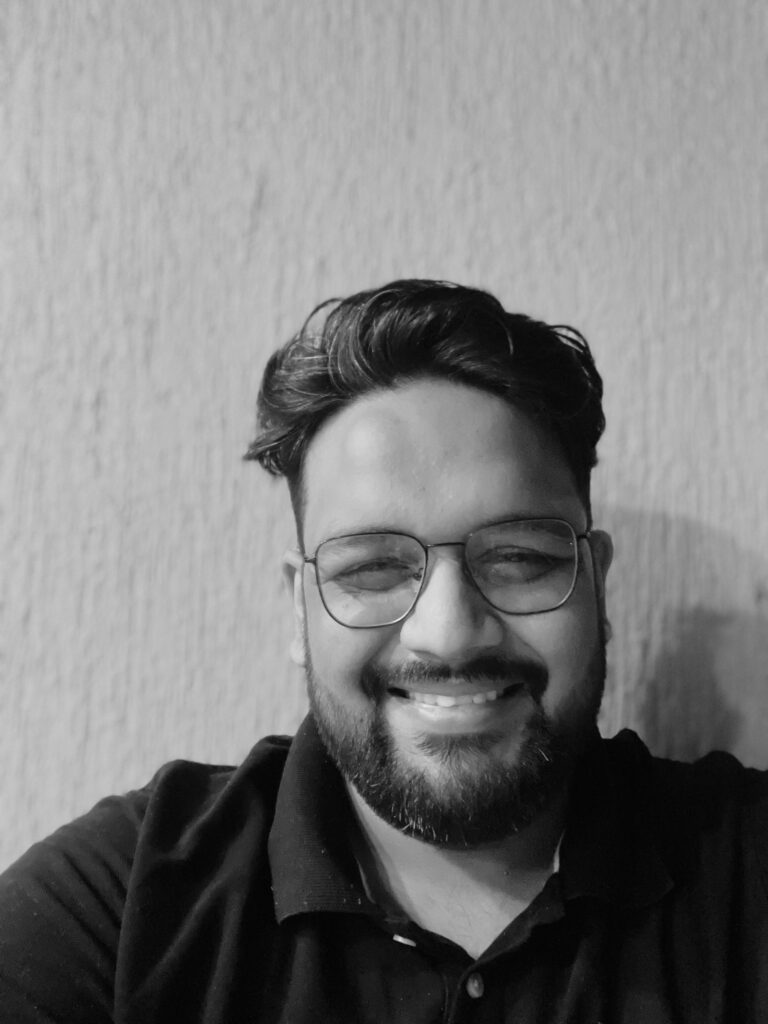
Pranav Rohit Kasinath is an anaesthesiologist practicing in Hyderabad, India. He has been writing for eleven years across literary fiction, memoir, and medical nonfiction. His work explores medical practice, mythology, and the cost of being human in an uncertain world. He is currently completing a novella that reimagines Hindu cosmology through domestic realism.
_________________________
Photo by Tarun Tom on Unsplash
Find MeanPepperVine on Instagram @MeanPepperVine
As I read this piece of medical non fiction, I was moved to tears reading the struggles of the author in trying to get a hold on the volcanic explosion of emotions inside him even as he continued to disperse his duties ! The redemption to me was in holding the hand of the old lady about to undergo the surgery and the assurance in that act!
What makes this piece of writing very soul touching and emotional is that this is real and non fiction!
Saying you are ‘fine’ is what everyone wants to hear….