| Jaiwantika Dutta Dhupkar | Book Review |
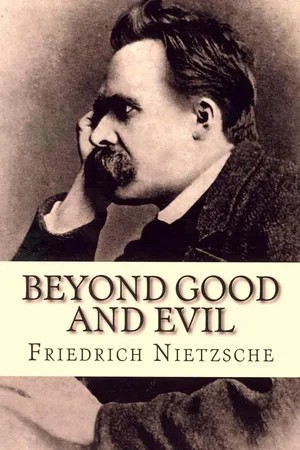
To truly understand Friedrich Nietzsche’s Beyond Good and Evil, it is important to fathom the times in which he wrote. This would give us some sort of historical context, and would help us understand his thoughts on democracy, free thought, free will, masculinity, the Good European and Free Spirits, among other things. Nietzsche wrote ‘Beyond Good and Evil’ during a time of political churning in Germany, where the German aristocracy, led by the Chancellor Otto Von Bismarck, heralded a period of industrialization. The aristocrats were nationalists, but their brand of German nationalism and German hyper-masculinity were challenged by ideas of free will, free speech and democracy emerging elsewhere in the world at the time. To Nietzsche, democracy meant the decline of culture and civilization, and he saw in it an excuse to uphold mediocrity and suppress talent by withdrawing opportunities from the deserving. Darwinism was growing in stature around this time, and Darwin’s ideas directly challenged the Christian conception of Godly creation, leading Nietzsche to quip that God was Dead.
Nietzsche was also greatly influenced by the German philosopher Schopenhauer, who in turn, was influenced by Buddhist and Vedic philosophy. Schopenhauer stated that asceticism was the ultimate goal of the evolved soul and renunciation was therefore how the evolved soul sought to effectively negotiate suffering. Contradicting Schopenhauer, Nietzsche said that renunciation was no solution at all and suffering was in fact, a part of life. He wondered why philosophers were so intent on alleviating suffering ( his ideas on the pleasure principle would later be taken up by Sigmund Freud decades later). Nietzsche stated that an evolved soul did not run away from suffering. He sharply criticized democracy as a political system, saying its “rights-based” approach went against Darwinism, and artificially carried forward weak and mediocre human specimens at the cost of the strong. With regard to “free thought” and “free speech,” he said that it is man’s Ego that causes him to think that his thoughts are his own. When we don’t know for sure whether our thoughts are our own or whether they have been planted in our minds, there is no question of either free thought or free speech. According to Nietzsche, free will was a myth and did not exist; what existed instead was the Will to Power, something Freud likened many years later to the Id, and which manifested itself in all of man’s activities from the most mundane biological functions to his more evolved actions.
Nietzsche felt that democracy as a pathological political system was essentially rooted in Christianity and “love thy neighbor “ ideology. Nietzsche said that Christians, on account of their faith, felt obliged to put the lamb before the lion, to favor the weak over the strong, and to love one’s neighbor, even at a cost to themselves. This, he said, resulted in the decline of European civilization overall ( he was talking in 1886) and resulted in genetic hybrids which caused much social and cultural confusion among the population. Nietzsche felt that even Eastern philosophies like Buddhism and Vedanta with their renunciation-based approach seemed to support democracy, and this would be disastrous for a people who should instead be willing to suffer and endure hardship like its ancestors in order to survive.
Nietzsche spoke about ‘Master morality’ and ‘slave morality’ and said that essentially, democracy glorified the ‘slave morality’ in people, where the population was encouraged to highlight their deficiencies and shortcomings, yet not take responsibility for anything. He was of the opinion that the ‘structure of an individual’s soul’ could determine the extent of its nobility or if it was ignoble, and likewise capable of a master morality or not.
Nietzsche was writing at a very interesting time, a time of political flux, when aristocracies were being replaced by democratic systems, when industrialization was replacing old ways of doing things, when travel was introducing Europeans to other religions and they were writing extensively about everything.
Nietzsche is an essential pre-reading for young academics, whether one intends to research psychoanalysis, feminism, or Postcolonialism. His views have influenced politics, psychology and literature vastly, and reading him as a necessary first step before reading Freud, for instance, would give one that additional perspective required to navigate various complex literary texts.
Reading Nietzsche, one is unsure about how to place him: is he conservative and upholding the status quo? Is he revolutionary and full of “modern ideas”? I read “Beyond Good and Evil” once, then I read it again, read it a third time, and I still don’t know the answer. One thing I do know, though, is that this man writing in 1886 has articulated things just beyond my conscious mind that I couldn’t articulate even to myself. You may not agree with everything he says, but “Beyond Good and Evil” is relevant even today, all these years later.
_________________________

Jaiwantika Dutta Dhupkar is a writer, academic and independent journalist whose interests, other than literature, include art, philosophy, animal welfare and culture. She has published more than five hundred articles in her sixteen years as a journalist and content creator, has published academic papers on Kafka and Conrad, and also has a book titled “Adopt That Streetie: A Quick Guide”, that retails on Amazon Kindle and whose proceeds go towards the cause of animal welfare and stray dog adoption.
_________________________
Find MeanPepperVine on Instagram @MeanPepperVine