| Usha Aswath Iyer | April 2026 | Short Story |
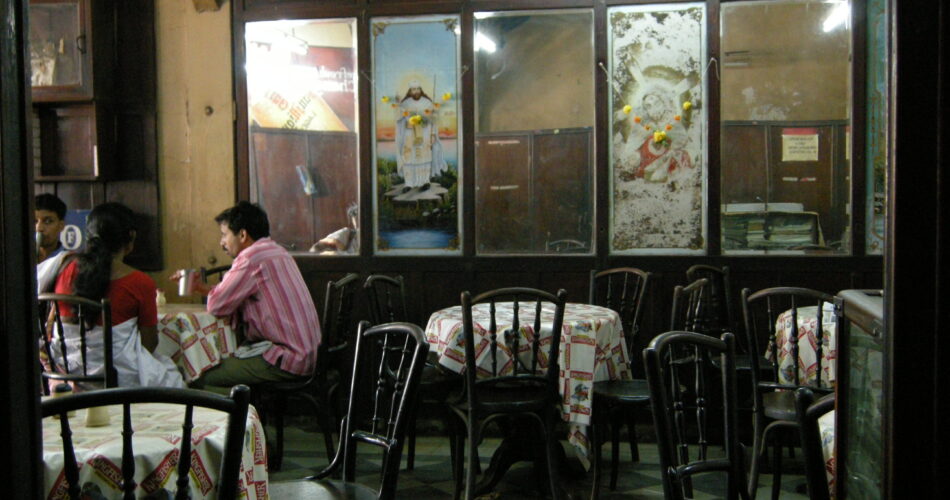
We sat in the small Iranian café, famous for its bun maska, tiny samosas and chai. There were a few early risers who had come for their brekkie. The interior was dimly lit but exuded a warmth that embraced you. The cash counter kept ringing as people ate their breakfast, got up and paid. Payment was at the cash counter. One paid and left. No tipping. I think the waiters had forgotten about this part of their service.
But the bun was fresh, the maska (butter) soft and warm and generously spread between the two halves of the fluffy bun. There was tea, hot and sweet and strong. There were other items on the menu, but the bun maska was the hot favourite.
We ordered plates of bun maska and tea. The three of us huddled together, bewildered, tense, looking around but not at each other.
The three of us were my brother, my friend and I. And what had brought us to this place? A phone call in the early hour of the morning. We had rushed to the hospital, where my mother had been admitted just a few days ago.
‘Come as soon as you can. But there is no need to rush,’ said the calm, impersonal voice from the hospital.
We, of course, had rushed. Only to find that my mother was sleeping and could not be disturbed. It was the Doctor on call, who had suggested we have something to eat and come back at a more earthly hour.
The elephant in the room could not be addressed. We did not want to guess or outguess what destiny had in store for us. Hours of waiting lay ahead, and the body needed its regular quota of carbs et al. So we had come to the café, close to the hospital and unassuming in its appearance.
We did eat a decent breakfast, my brother even had [5] two cups of tea. I remember the slightly sweet taste of the bun and the rich creaminess of the lavishly spread butter. We paid and left, walking slowly towards the hospital. We were in no hurry to reach. A sense of impending doom held us back.
My mother had already spent around forty days in another hospital. Forty days of vacillating between the ICU and the ward. Her blood pressure would drop alarmingly, and we never knew what would happen. But the times when she had been lucid, she had maintained her cheerful spirits. I could hear her, often, chatting with the nurses in Malayalam, the language she had used in her childhood. Her sweet, sharp voice conveyed no sense of despair. And the nurses, thrilled to hear their mother tongue, kept scurrying around her, asking after her health or sharing bits about their lives
But soon, the stay at the ICU lengthened, and the sunny spirit greyed under a grey sky. The ICU ward seemed to be closing in on her. There was no definite end to her misery. And then she changed. Her stoic silence was only interspersed with the persistent question, ‘When can I go home?’
The number of excuses I whipped up to keep her satisfied! ‘Ma, it is already dusk now. The ambulance drivers have gone home. Tomorrow we will find out.’
But her sharp mind would not let me off so easily. ‘Why can’t you get a car and a driver? Why wait for the ambulance?’
And then I would spin a story about how the hospital rules did not permit a patient to go home in a vehicle of their choice. It had to be an ambulance.
My mother’s only refrain was, “Take me home. I want to go home.” We tried to console her, convince her, but she was adamant. My brother, softer than me, said, “Why don’t we take her home for a few days? We could arrange a nurse, you know.”
But I had hesitated. I knew her health was fragile, and only the medical care she was receiving at the hospital kept her alive. How could I risk taking her home? How would I deal with any sudden, drastic fluctuation in her parameters?
Pune was “home” to us. Mother had come to Pune after her marriage, and in Pune, my brother and I had had our education. My father had worked in Pune and died there. It had been her home for more than forty years.
And so this hospital in Pune had been the solution. The hospital and the doctor were familiar. The city was known. And many of her friends still lived there.
The ride from Mumbai to Pune in an ambulance had left us all tense. Would she survive this ordeal? Would she?
Mother had gone back to her chirpy self. The thought of home kept her going. She smiled at my brother and looked, bright-eyed, at what little she could observe. The ambulance ride only left her pink-cheeked and giddy with happiness.
The first day went in tests and blood samples being collected. Her earlier reports were scanned thoroughly. The doctor was not ready to make any predictions about her health. But my mother was happy. Pune was home, and she had returned to her city. Her bright smile and her sharp, sweet voice had indicated that she was now ready to get out and get back to living.
In the evening, her friends and some relatives came to meet her. She spent the whole evening talking to them. She didn’t once ask for my brother or me. She looked so much spryer than we had ever anticipated.
Finally, we felt that she would come out of this, alive and well.
After our breakfast at the Iranian café, we came back to the hospital. We sat around waiting forour mother to wake up. The doctor on call had told us, that she had had two episodes in the night. But our dull brains could not comprehend what he meant. Did he mean she had troubled them, asked for us? She was usually sunny-tempered, but I had also had glimpses of her stubbornness! Her reaction when the physiotherapist had insisted she walk, after a hip surgery some years before. She had lashed out at him, using abusive terms I had never known that my mother had in her vocabulary. And she had successfully gotten rid of him, calmly stating, ‘He thinks he knows everything. Just let him lie in my state for a few days, then he will realise.’
I was finally able to enter her ICU cubicle at around eleven o’clock. The cold hit me. Was this how it would be? The warmth of life slowly covered by the frozen zones of death? I shook off these thoughts.
Amma was asleep, all bundled up. Not one part of her body could be seen except for her face, framed by the white sheet from which stray wisps of white downy hair tried to peep out. Her hands lay outside the tent of swaddling cloth. The palms were lined with years of life, but still slightly pink. I tried to see if she was breathing, but could not ascertain the fact. There were so many tubes running in and out and about. All were the link to her health and to the monitor, which let out soft sighs. I made frequent peeps into her room, but she was still sleeping.
At around one, the senior doctor came on his rounds. He toldme, “She has slipped into a coma. She had three episodes in the night.” That alien word again!
I went back to the cubicle, looking at her face, trying to imprint it in my heart. I knew I didn’t need to. She would never be forgotten. I took her hand gently in mine. She seemed so fragile, so delicate. I was scared to touch her. I might inadvertently hurt her. She, who had already been pricked and prodded and dosed into a numb waiting.
I gently rubbed one finger against her palm. That was the only part of her I felt confident touching.
Was that her signal? Had she been waiting for our presence, our touch? For almost at once, the monitor went into a flurry of activity. And then came the dreaded straight line. I knew. The staff was keeping a close watch on the patients in the ICU. They rushed in at once. They indicated I should leave. But I knew the truth.
The next few hours went byin a rush of activities. We took her ‘home’, to the house I had bought but had never lived in. She had finally come home. And she left, surrounded by friends and family and her two children.
Her ashes were immersed in the Indrayani River.
Whenever I pass the café, I remember that day.
And I have never eaten bun maska again.
_________________________
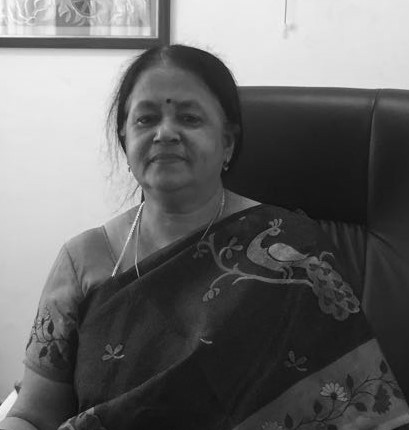
Usha Aswath Iyer is a post-graduate in English and Education. She has worked as a teacher, Principal and Director in Kendriya Vidyalaya Sangathan. Her collection of short stories titled ‘The Quilt and Other Stories’ and ‘The Last Laddoo-Colours of Childhood’ have been published.
_________________________
Find MeanPepperVine on Instagram @MeanPepperVine
hello Ma’am, Thank you for sharing something so deeply personal. small details carry emotions (eg fresh bun, rubbing her palm etc) And that last line — I have never eaten bun maska again – Five words and it says everything…
Thank you