| LA Nolan | April 2026 | Short Story |
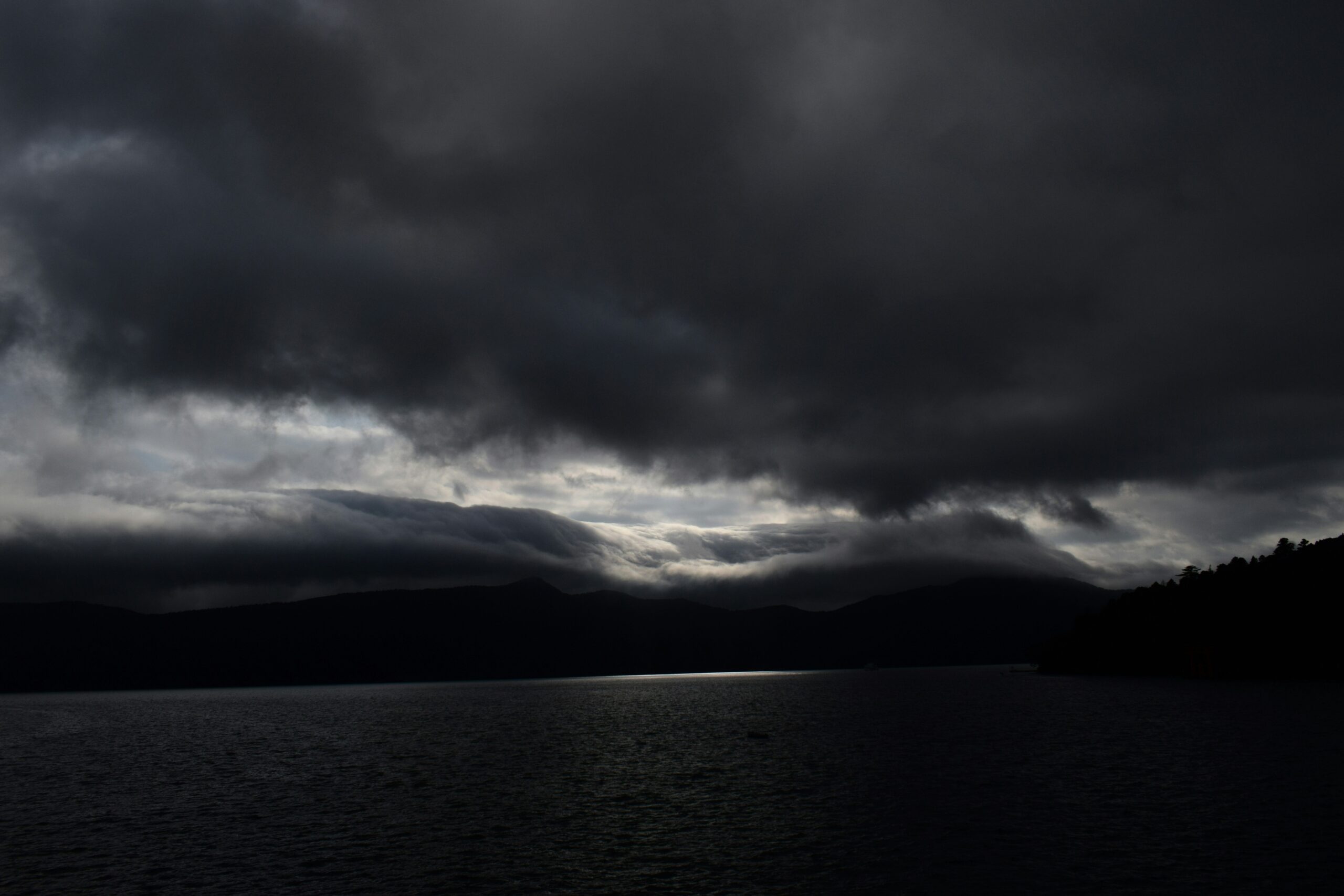
The girl’s pigtails—tightly braided and tied with pale blue ribbon—lifted from her shoulders and thrashed in the rising wind. Raindrops, flung sideways by the urgent breeze, needled her cheeks. They mingled with tears and streamed down her face as she sobbed in the tiny rowboat.
The boy dipped the oars into the steel-grey water and heaved, using all his strength to propel them towards shore. It approached, now within range to hear the cries from the crowd of concerned folks gathered on the shoreline, calling out words of encouragement.
Had he been just a few years older, he might have noticed the white clouds above bruising purple and black and seen them drawing close. He would have felt the shift in the wind and the increasing petrichor scent in it. He would not have ventured out onto the lake at all.
Water pooled and sloshed at their feet, spilling over the gunwale with each roll. They rose, and as they fell, a large swell slapped the tin wall of the hull, jarring an oar from the boy’s grasp. It slid into the murky depths.
He looked at the girl and, pulling the other oar inside, opened his arms to her. She crawled from her seat on the bow and joined him on the centre thwart. He embraced her tightly as she wailed against his chest.
***
The wheels of Indigo flight 6E1025 hissed against the rain-slick tarmac at Chhatrapati Shivaji Maharaj International Airport. Spray fanned out from the landing gear. Through the oval window in the business class cabin, a blur of runway lights smeared across wet glass as the Airbus slowed, turned, and began its crawl toward Terminal Two.
Ji-Hoon Lee popped open his seat belt and massaged his aching left calf. He disembarked quickly, joining the stream of passengers funnelling through immigration. In the terminal, Hindi, Marathi, and Gujarati swirled around him. He moved among them all, fluent in none, his stilted English, edged with Korean inflection, marking him apart.
Downstairs in the prepaid taxi area, his driver was waiting. He slid into the back seat of the white SUV, glanced at his watch, and told him to hurry. Bandra Kurla Complex was less than an hour away, but one could never rely on Mumbai traffic moving freely.
The ground floor of Number One BKC was a temple to ambition. Glass, marble, polished chrome—you could feel careers rising and falling in the lobby.
Mr Lee, normally hyper-controlled and focused, was limping and tired. Today, he moved slightly out of sync with the building’s opulence. Mr Lee ignored the doorman’s greeting, gave the security guard at reception a curt nod, and, skirting a cleaning trolley and its attendant staff, made his way to the bank of lifts. He joined the waiting cluster of sharp-suited executives and noticed none had pressed the call button. With a shake of his head, he stabbed it with his finger. It flickered once, twice, then illuminated fully.
After a soft chime, the chrome doors slid open. The group continued chatting and made no move towards the lift. Mr Lee hesitated a moment, then, perplexed, entered and selected the twentieth floor.
He liked the rise to the penthouse, smooth and quick, akin to his career. He glanced up at the display. The numbers flashed by rhythmically, a steady ascent. Then, a lag, a flicker, like the call button. The climb slowed.
“Good morning, Mr Lee.”
He startled. He thought he was alone. He turned to see a businesswoman in a tailored charcoal suit, an executive pass on a white lanyard, and sleek hair pulled back, exposing pearl stud earrings. How had he not noticed her?
“Good morning. I’m sorry, do I know you?” he asked, offering a respectful bow of greeting.
“You do, yes.”
The light above buzzed, and the fan faltered. Mr Lee rubbed his leg. She squinted her eyes and flicked them to the floor display.
“I’m afraid we have limited time, Mr Lee. You’re entitled to clarification. But only within scope, so you are afforded three questions before termination. Regrettable, but that’s the policy.”
His heart thudded in his chest, and his throat went dry.
“Termination, for what? I’m a director. Are you with human resources? Who are you?”
He looked at her executive pass. The words, her photo, were shifting, illegible.
“Are those your three questions, Mr Lee? That’s a poor use of allocation.”
He opened his mouth to reply, but then considered the language—HR tone, cold, efficient corporate jargon—and closed it.
The lift shuddered as if expressing urgency.
“Mr Lee?”
“No, I… I don’t—is this real?”
“Common first question. Yes, as real as anything you have ever signed off on.”
The fan crackled and stopped, burning plastic, ozone. The lift bounced, and the ascent quickened. The floor numbers blurred and twisted into Korean characters. A steel band tightened around his chest, and an unfamiliar panic settled in. His mind scrambled, searching for what error he had made, how he could fix it. Somewhere behind the hum of the lift, a voice he didn’t recognise whispered through the mirrored wall. You’ve never belonged here.
“Your second question, Mr Lee?”
“I don’t know what to ask,” he stammered.
She studied him a moment, almost kindly.
“Then ask the questions you never do.”
He frowned.
“I don’t—”
“You don’t ever enquire about her, do you?”
***
He stiffened. The ache in his leg flared, as if to confirm he knew who ‘her’ was. His sister, So-Mi. No, he never asked himself anything about her. He can’t. He won’t. It hurts. It is done.
“Her?” he asked.
“An unresolved incident. Major liability. Please account for it, Mr Lee.”
“I will not.”
The woman shrugged at him.
“Why should I?”
“Is that your second question?”
“No, it’s rhetorical. There is nothing to ask.”
He struggled to keep his voice steady.
Then, the memory rose; he couldn’t force it down—Gapyeong-gun, the soft grass, the shade of a Mongolian oak… reading his Dragon Ball comic… So-Mi tugging his sleeve and pointing at Cheongpyeong Lake.
The ache in his leg flared again. He gripped the rail, reliving the moments, feeling the images, and before he knew it, he was speaking. Unfiltered words spilt from his lips.
“It was an accident. We were on holiday. It was my holiday too. I was twelve. Stuck with her. Babysitting. She was seven. She wanted to go to the lake, not me.”
The aluminium rowboat, number 06 stencilled in yellow on the side… the life jackets left on the dock… So-Mi laughing, clapping her hands, leaning over the edge to spot fish… the breeze lifting her hair.
“I only wanted to read my comic,” he whispered. “But she was so happy, on the lake.”
The waves getting choppy… the darkening sky, drops of rain… her squeal, asking to go back…the boil of bitterness in his stomach.
“It happened so fast—the storm, the waves. We tipped; I surfaced, she didn’t. An accident.”
The woman watched as he spoke, her face betraying no emotion. It was as if she were assessing his words.
“An accident,” she repeated after a moment. “Yet, you saw the cloudburst, felt the drizzle. She begged you to turn back when it started. You had time, but you failed to act.”
“I wanted her wet. I wanted her to be miserable. I was angry.” Mr Lee hesitated, and his brows knitted together. “This is all highly inappropriate, and I don’t see that it is any business of yours.”
The woman cocked her head as a wry smile tugged at the corner of her lips.
“Consider this a part of your termination interview. The facts remain, Mr Lee, angry or not, you were aware of the turning weather, you had ample opportunity to act, yet you did nothing. Is this liability accepted?”
The overhead fan restarted with a static pop, and bleeding through the whirr of its thin blades, he heard the faint sound of an aircraft engine powering up. His calf felt as if a thousand fire ants were burrowing into the muscle. Mr Lee slumped back against the wall of the lift and massaged it again. He swallowed hard.
“Was it my doing, truly, my fault she died?” he said, more to himself than the woman.
“Is that your second question?”
Their ascent slowed almost to a stop. The deceleration contrasted with the building whine of the jet engine, which made Mr Lee grasp the handrail and steady himself. The lift was slowing down, but the surrounding cacophony was speeding up, causing a dizzying sensation. As if taking off, the jet’s roar reached a crescendo, then quickly faded. The silence that followed, the weight of it suffocated him. He managed a single nod.
“You left the life jackets behind in your irritation, and your vindictive desire for retribution delayed your return to shore after the storm began. Yes, Mr Lee. It was your fault.”
Her words, unsullied and cold, stung him deeply with their confirmation of what he had always known to be the truth. Even his parents, although never verbalised, had blamed him as well, and that belief had never waned. Over the years, little by little, they froze him out. That is why, after college, he had built a life abroad, running away from his family’s unuttered incrimination. Mumbai skyscrapers were his escape—higher, farther, untouchable. He had hidden behind them and allowed the monsoon rains to wash him clean.
Still, the more successful he became, the more his parents drifted away, and after both his mother and father had passed, silence was his only inheritance.
“Is the liability accepted?”
For Mr Lee, the question ran far deeper than accepting culpability regarding his sister’s drowning. It would announce his utter failure of filial piety. Although the emphasis on respecting one’s parents, the obligation of caring for them, and the duty of bestowing honour to the family name, for him, was rooted in Confucianism, he was aware that traditional Indian culture shared much of the same value system. Admitting this fault would bring him great shame. And he was to blame on all accounts.
Yet, perhaps the very act of professing his responsibility would display some measure of fealty to his father and restore grace to his family name. To elevate honesty over saving face would surely be a gesture of suavity. A return, albeit a slight one, to the ethics instilled in him since childhood.
“Yes,” he croaked.
“Good, Mr Lee. Very good.”
Her voice was soft, almost tender. The timbre of it released a wave inside of Mr Lee. Not of relief, but more of a grim acceptance. A tsunami of recognition swept aside his denial. He saw it clearly now. His entire life had been an overcompensation. He had taken a foreign post and immersed himself in endless work, fuelled only by insatiable ambition. Mr Lee had hidden away, shunning leisure interests or seeking friends, and—most crippling—mourned a lost family. He had been climbing skyscrapers to escape the rising waters of a phantom lake.
He viewed his reflection in the mirrored wall. His brow was damp, his eyes were edged with moisture, and he saw So-Mi in his image. Innocent, pure, carefree. She was running barefoot through a sunlit meadow, flying a paper kite that fluttered against an azure sky, giggling joyously as he chased along behind and tickled her ribs. He reached out to brush her cheek, and as his fingertips found it, the vision faded, and there was nothing but his own likeness. Mr Lee closed his eyelids, trying in vain to hold on to that scene, and as it dissolved, he sobbed. Her face was gone, but the laughter remained, lingering in his ear.
Then, above it came a distant thunderclap, the howls of a rolling storm, and the staccato of driving rain. He snapped open his eyes to see the woman regarding him evenly.
“Our moment dwindles, Mr Lee.”
Her eyes flicked to the display above the door, and he tracked her gaze. The Korean symbols had morphed back into digits and, with a shimmer, announced their arrival at the eighteenth floor.
Another riot of pain exploded in his calf. This time, his knees gave way, and he crumpled to the ground. The lift filled with the concerned gasps of an invisible crowd, followed by the high-pitched howl of another aircraft lifting off.
He grasped his lower leg with both hands and massaged it vigorously, but the searing ache did not diminish. Instead, the shrill cry of an ambulance siren assaulted his ears, and he winced against it.
“We are not in a lift, are we?” he asked.
The woman lifted her eyebrows.
“Is that your final question, Mr Lee?”
“No,” he blurted. “No. It’s not.”
Mr Lee loosened his tie, unfastened the top button of his shirt, and, despite his agony, struggled to his feet. He looked at the woman. Her body language displayed poise, control, and near perfection—straight as a machined girder, shoulders squared, and hands folded loosely at her waist, waiting.
“I will not use a question. Rather, I’m going to explain what I understand to be the situation.”
She gave him a barely perceptible shrug.
“I have a blood clot. Deep vein thrombosis brought about by my flight from Singapore. And often, in such cases, the result is a fatal pulmonary embolism. I believe, ma’am, that I am dead and at present, caught between floors.”
Her eyes wrinkled and her nose scrunched; the expression gave no inkling of confirmation or denial.
“Your final question, Mr Lee?”
There was only one. The question that had burrowed deep into his chest—a worm into a rotten apple. The question he had suppressed from the moment he had regained consciousness on the shore of the lake and learnt his sister was gone. The question that, while well buried, surfaced to plague him in his weakest moments. He had spent a lifetime refusing to ask it. Mr Lee shook his head and offered a small bow.
“No, thank you. I have no question, Ms…?”
“Kalra,” she said. “Ms Kalra. That is your prerogative, Mr Lee. But I would strongly advise you to follow the termination protocol.”
He shook his head again.
“Very well.”
The lift lurched to a halt, and a soft chime resonated from above. Mr Lee saw the flickering display reading the twentieth floor. He swallowed hard and shifted painfully to face the doors. They slid open slowly, silently, and a silky shaft of light spilt between them and into the lift. At first, he raised his hand to shield his eyes, then lowered it and gaped in astonishment. It was not his chaotic office. There were no bustling interns, no ringing phones, no clattering of keyboards or the din of urgent voices. Instead, there lay a sheet of water in twilight, the tranquil surface of Cheongpyeong Lake. The amber hues of the setting sun melted across it, and a warm breeze caressed his cheeks. He inhaled deeply and, with a nod, stepped forward into the water. Ripples spread out from his ankles as the moisture saturated his shoes.
Mr Lee lifted his foot for another step, then hesitated and put it down again. His heart fractured, his resolve waned. How could he never know? His chest tightened; he looked back into the lift, a plea trembling on his lips.
Ms Kalra nodded.
“Did So-Mi… Did she ever forgive me?”
“No, Mr Lee. She didn’t.”
The lift doors sealed, and in the lake, ripples spread outward, swallowing his reflection until nothing of Mr Lee remained.
_________________________
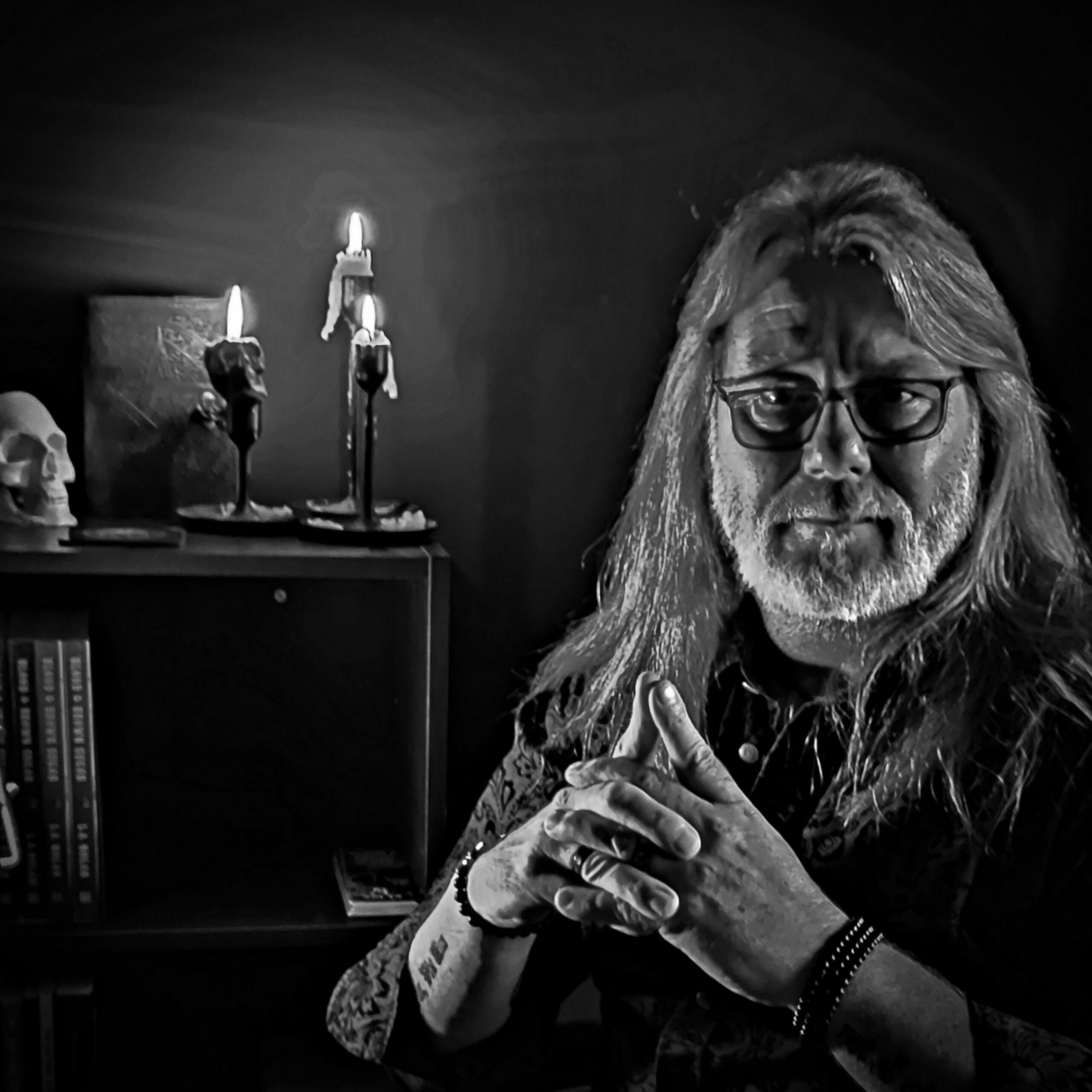
L A. Nolan is claustrophobic, suffers from a mild case of trypophobia, and is deathly afraid of witches. He is also fairly adept at writing fiction. Nolan named his beagle Sweeney Todd and believes dogs are better than cats, Coke is better than Pepsi, and The Beatles are better than The Rolling Stones. His motorcycles, Wilhelmina and Elvira, live with him in Bombay, and Sweeney often cocks a leg to them during his afternoon walk, sprinkling them with his unconcealed jealousy. Nolan’s wife, without whom he would surely never finish anything, rewards the completion of his new manuscripts by rolling her eyes at his atrocious spelling and then studiously correcting it all. Sometimes she will bake him sugar cookies.
His work includes eighteen short stories in various literary and genre anthologies, of which The Peddler & the Crow won the Indian Writing Projects grand prize, As the Banyan Tree Wept was shortlisted by the Indian Film Project, and The Twelfth Night was shortlisted by Moonlit Getaway for short fiction of the year. His novellas include Memoirs of a Motorcycle Madman and Luna Hortus, which recently won the Westland IF competition. His novels Blood & Brown Sugar, A Crate of Rags & Bones, and Blood & Bombay Black have enjoyed critical praise and are available worldwide.
_________________________
Photo by Chris Barbalis on Unsplash
Find MeanPepperVine on Instagram @MeanPepperVine

What a great story! Hooked me from beginning to end.
Surreal! One heck of a story, Lee.