| Zahanat | October 2026 | Short Story |
I have memorized 847 speeches and forgotten only one: the three-minute one I never got to finish at age six, which somehow became the script I have been reciting ever since.
Thank you, Miss Jenny.
I have mastered the art of controlled panic: the ability to smile while my hands shake, to speak with confidence while my insides are dissolving, to look like an adult while internally screaming like a child.
Miss Jenny was fat with a Diana cut and the kind of face that whispered louder than her voice ever could. Miss Jenny. The gatekeeper of first impressions, the architect of your academic destiny. With parents, she was effervescent: laughter, compliments, calculated warmth that made them believe their children were being raised by Mary Poppins. With us, she was fundamentally different. She believed that love meant occasionally breaking you into smaller, more obedient pieces.
I attended the district’s most prestigious school, a fortress where “Manners Maketh Man” was carved into the archway like constitutional law, as if good grammar could solve the human condition. We were molded to be perfect little soldiers. Your nose could run but not your mouth. Your uniform could be wrinkled but not your posture. Perfection wasn’t an achievement; it was the baseline. You had to arrive fully formed, reciting the alphabet as you left the womb.
She came to school with her husband, who was fatter than she was. He drove a white Maruti Suzuki 800—one of those cars that seemed physically incapable of containing two adult bodies, yet somehow did, bouncing each time slightly, either of them entered or exited, as if the vehicle itself was sighing under the sheer weight of their existence, exhausted.
It was custom to greet them both. If you didn’t, if you made the mistake of acknowledging only one, Miss Jenny would make it a public trial. She would ask you endless questions from lessons she hadn’t even taught, watching your panic like it was premium entertainment. Miss Jenny would mine that moment for moral lessons the way archaeologists search for artifacts.
Little battle tests appeared without warning. Pop quizzes on Friday, when your brain had already clocked out for the weekend. Sudden demands to recite memorized poetry while everyone stared. “Voluntary” talent shows where volunteering was a command disguised as choice, a semantic sleight of hand that would have made a politician proud. They came with the implicit threat: If you can’t handle this, what does that say about your character? (Translation: You are fragile and we have identified you.)
And when you failed these trials, the slap would come. A slap that felt like life itself was correcting you for your incompetence. A slap that said: Even courtesy is a test you can fail.
Once, Miss Jenny announced a ‘surprise recitation day’ on a Tuesday morning. No warning. No preparation. Just: “Everyone will recite the poem from last month. Now. Standing. In front of the class.” Rehmat, who had genuinely tried to memorize it but suffered from test anxiety the way some people suffer from migraines, stood up and froze. Completely. Her mouth opened and closed like a fish gasping in the wrong medium. Miss Jenny stood there, arms crossed, watching with the patience of someone waiting for a flower to bloom. After what felt like an eternity, Rehmat accepted defeat. Miss Jenny made her stand in front of the whole class on her chair and told her to think about what she lacked. She was only allowed to sit back on her seat after her nose mucus and tears mixed and fell on her uniform.
I wish I could brag that I was Miss Jenny’s golden child, but being her favorite was like winning a lifetime supply of concrete blocks—you just carried the extra weight everywhere. I rose in her eyes because I did my homework on time (never mind that I cried through half of it). Because I crammed poems until they gave me nosebleeds and prepared lessons two weeks early like a tiny doomsday prepper.
It was unfortunate to be among her favorites. She demanded perfection, and once you were caught in that web, escape was about as likely as her Maruti fitting through the school gate without groaning. On days you were absent, she gave you double homework—as if catching a cold was a personal act of sabotage against her syllabus, and extra worksheets were her passive-aggressive Post-it note reading Miss me? Here’s 20 pages of fractions. You had to be the best of the best of the best, or risk becoming the kid she used as a human PowerPoint slide titled “What Not To Be.”
One mistake and you would plummet from favorite to cautionary tale.
I had been molded by Miss Jenny like government-issue Play-Doh—squished, reshaped, and occasionally left out in the sun until cracked. She had checked on my improvement over the years, watched me climb higher and higher into her good graces with the intensity of a hawk tracking a particularly obedient rabbit. I didn’t know then that being her favorite meant my fall would be staged, lit, and ticketed.
All it took was one moment of weakness. And I fell down from her eyes into oblivion.
It came during an inter-class competition: “My Morning Routine.” I was one of three chosen to represent my class; a tactical selection to guarantee a trophy. Miss Jenny and my form teacher had discussed very carefully whom to select. It was as if they were planning an invasion. I had been chosen because I was her investment. Because I was supposed to deliver. Because I had never let her down before, and she was confident that this time, under the bright lights of an auditorium full of strangers, I would somehow transcend basic human nervousness and perform like a trained seal.
This campaign spread far beyond my classroom to my home. My entire family mobilized like we were preparing for war. My parents and elder brother interrogated me about every movement I made between waking up and walking out the door, as if “brushing my teeth” was classified information that required military-grade scrutiny. They drafted my script with the seriousness of a legal treaty, debating the exact angle of my head during the line about combing my hair. My father timed each sentence with a stopwatch. My mother corrected my pronunciation of “routine” approximately eight hundred times. My brother watched silently, the way he always did, like he was waiting for me to fail.
By bedtime, my three-minute speech about personal hygiene was ready, tucked into my school diary like a nuclear launch code.
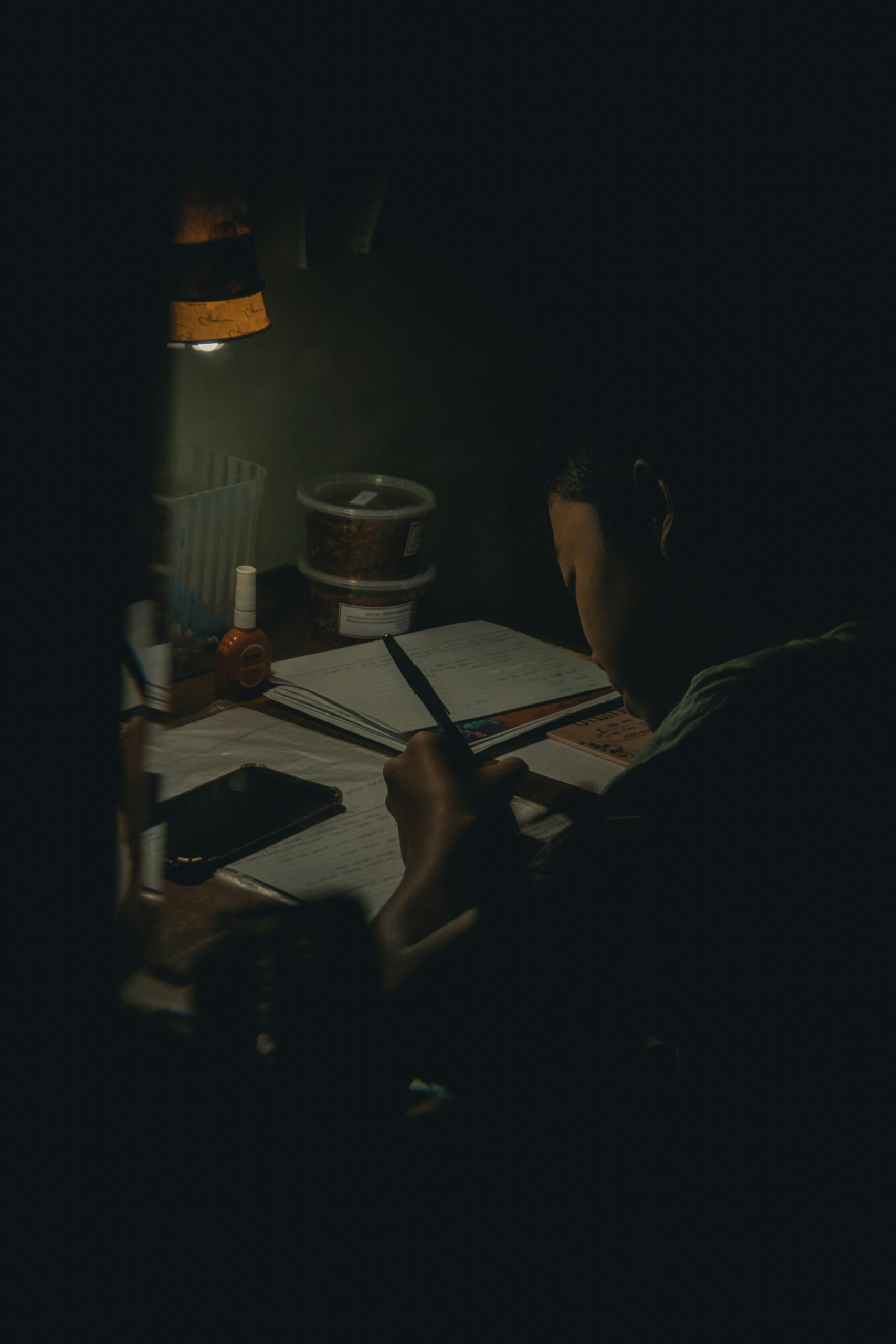
I recited it to the walls, to my dinner plate, to my parents, to the mirror, to my stuffed animals. “Eye contact,” my parents warned. “Don’t stare at the paper. Move your eyes.” I folded and unfolded that piece of paper so many times it grew soft and fuzzy at the edges, the creases deep and familiar. It became my talisman. My security blanket. My emotional support document.
I had nightmares about losing it. In one dream, the wind blew it away mid-sentence. In another, it dissolved in water. In a third, it turned into a bird and flew away. My subconscious was essentially writing horror films about paper, but never the one I actually lived.
The day arrived. The paper was tucked into my skirt pocket, and I walked with my hand pressed over it, feeling the crinkle of safety against my thigh. All the competitors from the three sections were marched into the auditorium like prisoners of war and seated on chairs that were too high for us, our legs dangling in the air. The room smelled of floor wax and anxiety, that particular smell of childhood terror being polished into oblivion.
The auditorium itself was a cathedral of judgment. High ceilings, creaking floors and doors. The kind of space that made a six-year-old feel like an insect about to be examined under a microscope.
Teachers sat in the front, clipboards ready. The judges—Miss Jenny among them sat at a table with the solemnity of people deciding the fate of nations, when in reality they were about to watch children nervously recite their morning routines.
She sat in the front row, notepad in hand, that calculated smile fixed on her face. Relief washed over me. Then a crushing weight. I had to win. Not because I wanted to. Because I had to. She was watching. She was always watching.
I saw my brother in the painting competition section on the other side of the auditorium. I had to show him that his little sister was worth noticing, that all this preparation, all this suffocation, had been worth something. I waved at him. He saw me but didn’t wave. He would later win the first prize for his painting. That moment felt like the universe confirming what I already suspected: I was not worth noticing.
I was the fourth in the sequence. I watched the first three classmates read from their papers. Some buried their noses in desperation, others glancing up nervously like they were defusing a bomb. The first girl spoke in a voice so quiet that people in the back rows leaned forward. The second boy spoke so fast his words ran together into a single, incomprehensible stream. The third girl delivered it flat, like she was reading a tax code, but she didn’t cry, which felt like a victory.
The wet boy, two seats down, sat stiff and silent, his black pants darkening in a slow, humiliating bloom that everyone pretended not to see, as if collective denial could mop it up. The girl beside him kept inching her chair away, her face fixed in the polite, frozen smile we had all been trained to wear in the presence of disaster. She was maybe six inches away now. By the time they would have called him, she might be in another section entirely.
A teacher noticed, leaned down, whispered something in his ear, and quietly escorted him out of the row like contraband being removed from display. He never made it to the stage. His punishment for losing control of his body was to lose his chance to speak. He was the only one spared that day. That lucky bastard!
Yet, I wasn’t worried. I was prepared. The words were part of my breathing. I had rehearsed this more than some people rehearse their entire lives. More than some people rehearse actual important things, like CPR.
I walked to the mic. It was a metal giant, adjusted down to my height with a screech that sounded like small bones breaking. I reached into my pocket, pulled out my soft, creased paper, and held it with both hands. My hands were steady. My breathing was even. I was a machine of preparation. A well-oiled instrument of performance anxiety. I took a breath.
“Stop.”
Miss Jenny’s voice came from the front row. She was standing now, one hand raised, that smile sharper now, more dangerous. The smile of someone who had just discovered a flaw in something she had spent months perfecting. She gestured to the senior student on stage. “Take the paper away. She should recite it by heart.”
Time stopped.
I watched the senior approach me, hesitation in her eyes, a silent apology written across her entire face, before she snatched the paper from my hands like she was disarming a bomb.
It felt like an amputation. It felt like someone had reached into my chest and removed something essential. It felt like the core of who I was—prepared, competent, safe was being ripped away.
I looked out at the sea of faces. I saw my brother waiting. I saw Miss Jenny’s smile, her eyes bright and victorious. The silence was a physical thing, heavy and suffocating, like being underwater. Like drowning in slow motion while everyone watched. I opened my mouth, but my throat had sealed shut. I knew the routine. I had lived it that morning, that week, that entire month, but without the paper, the memory evaporated. The words I had breathed into existence were gone. I was erased.
And Miss Jenny knew that. She had planned for that. This was no accident. This was deliberate. She had spent months building me up; praising me, choosing me, making me feel special, just so she could tear it down in front of an audience. This was theater. This was a performance piece about the fragility of confidence, and I was the unwilling star.
I looked down at my red socks. Red was the only honest thing in this auditorium. It didn’t perform. It didn’t prepare. It just existed, asking nothing of me.
“Give it back to her,” Miss Jenny commanded. “Put it on the floor.”
The senior placed my paper at my feet, wedged between my red socks and the mic stand. A mercy disguised as instruction. A humiliation dressed up as compromise.
I tried to read it. The tears had already come. They didn’t fall; they pooled in my eyes, turning the world into a watery kaleidoscope. I stared down at my talisman, but the ink was swimming. A tear fell, splashing onto the page, dissolving the word “brush” into a blue smudge. The paper was dying. I was killing it with my incompetence.
I stood there, a statue of misery, staring at a script I could no longer read, while my heart hammered against my ribs like it was trying to escape. I could feel every eye on me. I could feel my brother’s eyes. I could feel Miss Jenny’s eyes, bright and satisfied.
The silence stretched on. And on. And on.
“Next,” Miss Jenny said.
The word was a gavel strike. A sentence. A dismissal.
A gentle nudge from the announcer broke my trance. She picked up the damp paper and handed it back to me. I took it by the very edge, as if it were something dead, and walked off the stage.
I don’t remember the rest of the competition. I don’t remember who won. I don’t remember if there was applause or silence. I remember walking back to class, passing my brother, and refusing to lift my head. I remember the wet boy’s eyes following me. He was the one who had heard about my humiliation and not witnessed it. He had a smile on his face. He had finally found someone equal or more miserable than him at the moment.
“It was for your own good,” Miss Jenny told me after, with that same smile.
I fell from her grace after that day. The check-ins disappeared. I was no longer her investment. I was her failure. I was a reminder that even she could be wrong about someone. And in an institution built entirely on certainty, where teachers were never wrong, and students were always to blame, I had become inconvenient.
For the next several years, I carried this resentment like a daily vitamin. Every morning, the same prayer would autoplay in my head:
I wake up, the dawn’s first light,
Wash my face in the mirror’s sight.
Brush my teeth till they gleam white,
And wish Miss Jenny gone by night.
I carried this resentment through middle school, where I was oddly more relaxed because Miss Jenny was not there. Through high school, where I learned that not all teachers were mini-tyrants with opinions about greeting protocols. Through university, where I realized that preparation was useful but not everything, and that sometimes, the paper didn’t matter as much as I thought. But the resentment stayed. It nested in my chest like a pet I had grown too attached to.
I have given hundreds of speeches since that day. Presentations at work. Opening remarks at conferences. I have not stuttered once. I have not cried once. I have been poised, confident, and articulate. I have been everything Miss Jenny taught me to be. And every single time, before I walk on that stage, I put my hand over my empty pocket and feel for the paper that isn’t there.
Years later, I learned Miss Jenny had died. The details were never clear, and I didn’t ask. I remember thinking: finally. Her death was less a victory lap and more ‘traded my last candy for a rock’, no parade, just sticky fingers and a tummy ache from spite that wouldn’t quit. I half-imagine her ghost crashing into my life, yelling, “No paper for you—no blank page for the stories screaming in your tiny chest, and no colors for your wild dreams.”
That confiscated speech I can never recall, but out of it came my secret nursery rhyme, drilled into my bones—a playground curse I recite under my breath each dawn, skipping rope with spite:
I brush my teeth, I wash my face,
You were right, this world’s a rotten place.
Thank you, Miss Jenny, enjoy the heat
May hell assign you the front row seat!
_________________________
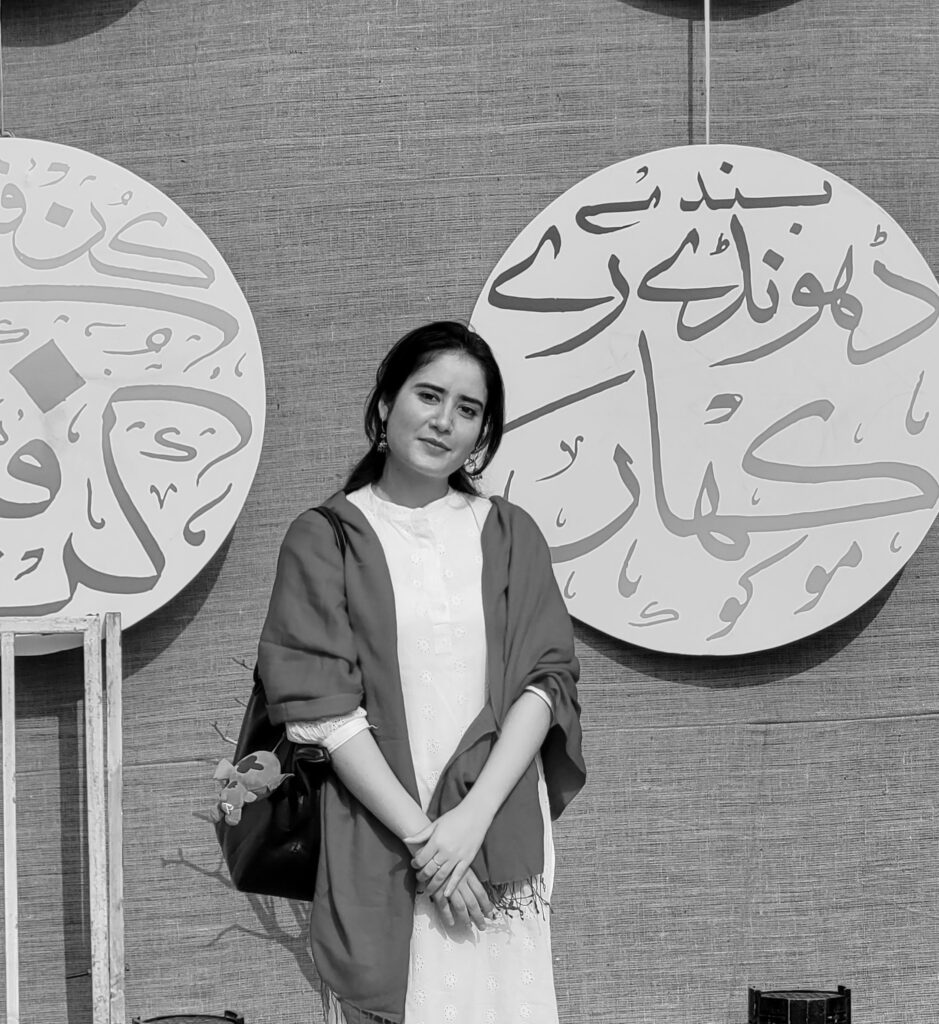
Zahanat is a Kashmiri writer, editor, and literary researcher. She graduated from Miranda House, University of Delhi, with a degree in English Literature. She currently serves as an editor at Maaje Zevwe (mother tongue), a literary platform and archive dedicated to bringing out stories and amplifying the diverse discourses of Kashmiri women. Her first creative writing piece, Mout, was shortlisted for the Deodar Prize 2025 at the Bangalore Literature Festival and is scheduled for publication in Kitaab International in 2027.
_________________________
Photo by Divjot Ratra on Unsplash
Find MeanPepperVine on Instagram @MeanPepperVine