| Dr. Ghulam Mohammad Khan | July 2026 | Short Story |
The evening light slipped through the window like a thief. Abdul Rashid’s shadow stretched across the floor, longer than it should have been. His eight-year-old son would sit beside him, small fingers combing through the grey in his hair. Each stroke was a plea that the boy did not fully understand. Rashid closed his eyes, but sleep stayed away. It always stayed away. Somewhere inside him, a clock had stopped ticking years ago. He was famous for his learning, yet he had never learned to look a student in the eye. The classroom was a distant shore he waved at from a sinking boat. They gave him a blackboard and chalk, but no time to turn around. Now the dust of that chalk had settled in his lungs. A quiet poison. It did not burn. It only refused to let him rest.
The disease had no name; they would speak aloud. People cursed him in the market and behind his back. They thought he enjoyed running. The files never left his hands. He trained young teachers in back rooms with dusty windows. He taught them how to count invisible voters and map streets no child would ever walk to school. Rashid remembered one afternoon. A new teacher asked him when they would actually teach. Rashid had no answer. He only handed over a blank form. That was the moment the poison moved from his lungs into his memory. He began to suspect that everyone else already knew the secret. They were all inside a perfect machine built to replace learning with forgetfulness. And the worst part was the machine felt right. It felt like duty. So no one grumbled. No one even whispered. He just carried files from one office to another. But now each file felt heavier than a child’s question he had never answered.
The poplars stood like old witnesses. Their leaves turned silver as the light began to lie. On the low green lawn behind his home, Rashid lay flat on his back. The grass felt cool against his neck, but the coolness could not reach where the heat lived. His son’s small fingers pressed his temples in a rhythm almost like a forgotten lullaby. He did not fall asleep. He fell somewhere else. The sky above him was not quite sky anymore. It became a ceiling of soft grey wool. The willows began to bend toward him as if to listen. Rashid thought he heard the rustle of files turning pages on their own. Then a whisper. Not his son’s. Not anyone’s. A whisper that sounded like a chalk piece dragging across a board that had no end. He tried to open his eyes, but his eyes were already open. That was the strange part. He was dreaming while still seeing the poplars. Or the poplars were dreaming him.
The river made no sound, but the banners did. Red and yellow and blue. They snapped in a wind that Rashid could not feel. His old hand trembled inside his son’s grip. Aabid looked handsome in the way a stranger looks handsome from a train window. Almost thirty. Almost real. The path was the same path, but the stones had forgotten his weight. Rashid asked again. Where are you leading me? His voice came out thin like a thread pulled from an old coat. Aabid smiled. The smile did not reach his eyes. The school building appeared between the poplars. It wore colours Rashid had never seen on any wall. Buntings hung from every window like torn festival ribbons. A loudspeaker coughed somewhere. Then the music began. A song about the nation and a great organisation whose name Rashid could not hold in his mind. The word member echoed against the mountains, but the mountains did not repeat it. Aabid said the celebration would last a week. A whole week for one day, one year ago. Rashid looked at the banners again. They fluttered as if trying to escape their own poles. He wanted to ask who had become the new member. The nation or the noise. But the question dissolved on his tongue like a lie his own throat refused to swallow.
The river did not answer. Rashid’s old voice hung in the air like a leaf that had forgotten to fall. He had spoken of books and consciousness and the quiet loyalty of teachers who taught despite the filth they were given. Then Aabid turned from the water. His handsome face caught the last light. He looked exactly like the boy who once pressed his father’s temples, but the eyes were different. The eyes had learned a new language.
“We know your generation was a deceitful generation to the very hands that fed you,” Aabid said. His voice was soft. Too soft. Like velvet wrapped around a stone. “Now we have no students. We have only this wonderful spectacle. We only celebrate what gives us our identity. We aren’t disloyal like the old ones.”
Rashid felt the bench splinter beneath his fingers. Or maybe it was his bones. “Who told you that, beta?” His own voice came from somewhere far away. A place before files. Before the poison. “Ours was a time when the schools were filled with children. Despite no focus on the book from the system that raised us, my fellow teachers would still steal moments from the filthy duties and teach. Except me. They later told me I could infect minds. So they gave me different things to do. But the others still taught from the book. And books shape a community’s consciousness. So no. We did nothing disloyal.”
He stopped. The word infect sat between them on the bench. Aabid picked it up like a man picking up a strange fruit. He did not bite. He only smiled.
The banners behind them flapped once. Twice. A sound like a bird with broken wings.
Aabid’s voice did not rise. It had the patience of someone who had rehearsed this conversation for years without the other person knowing.
“Those books hurt this land for a long time,” Aabid said. Each syllable fell with the soft certainty of a stone dropped into still water. “So we do not teach them now. No old filthy ideas. No disloyalty to the ground that feeds you. We have no students because they have finally understood. Books only breed bad people. We have agreed we cannot be disloyal. So we no longer teach how to become disloyal through a classroom where those cursed books are the true culprits. We have a beautiful course to follow instead. And they respect us for it. They pay us well. It demands great labour and great precision. Your time had neither precision nor skill. It lacked presentation. It lacked the grand spectacle of loyalty. So we are not merely loyal. We work harder than your generation ever did to demonstrate our loyalty. And we love demonstrating it.”
Rashid’s throat closed around something sharp. His voice came out almost stammering. Like a man learning his own mother tongue from a stranger.
“You have no students now. Yet you call yourselves honest. You call us disloyal. I am your father. How can you say such a thing to me? We had teachers who taught the poor. Who did not know that spectacle was necessary? We were loyal in our own way. Time changes. Loyalties change. But answer me this. Why are there no children in your schools anymore?”
The river did not move. Or perhaps it moved so slowly that movement had forgotten its name. Aabid looked at the water for a long moment. Then he reached into his pocket and pulled out a small folded paper. The paper was not white. It was the colour of old bone. He unfolded it slowly. There was nothing written on it. Or maybe there was. The light had begun to lie again. Aabid did not flinch. He folded the bone coloured paper again, slowly, as if performing a ritual whose meaning only he could taste. Then he spoke. His voice had the flat sweetness of someone explaining a very simple thing to a very slow child.
“Old people do not belong to the present. They cradle their own unreal fears like idols and then insist the present they cannot enter is a lie. Baba, your generation should have stopped. Stopped teaching children to be disloyal. We run a high school now. There, we show them through a presentation alone. Through colour and pageantry and the careful choreography of precision, how to labour for this loyal land. Nothing purer exists. They have already absorbed the lesson before they arrive at our gates. So the great system has wisely freed us from the burden of the book. We manage instead through image. Through skill. Through the beautiful circulation of loyalty to the land we inherit.”
Rashid listened. The poplars listened. Even the empty river seemed to tilt its head. Then the old man spoke. His voice did not stammer this time. It had found a strange calm. The calm of someone who has nothing left to lose except the truth.
“Oh, dear. Does this truly work?” A small dry laugh escaped him like dust from a closed book. “Forgive me. Old people are irrelevant. But my son. The land you speak of has not changed as much as you imagine. This road was smoother when I walked it as a child toward that same school. And that bridge. Is it not the same bridge? I apologise. I fail to see the transformation. The chinars along the bank near the bridge have vanished. And the river has vanished too. Only a littered rivulet remains in the middle of its ghost. How fortunate I am to see its boulder bed after all these years. Where did the water go? In my time, our parents beat us if we went near the river. They feared we would drown. Now I doubt a puppy could drown there even if it tried.”
The last word hung in the air. Tried. Aabid looked at the river. Then at his father. Then at the river again. The banners behind them had stopped flapping. The silence that followed was not empty. It was full of something neither of them could name. Something that had once been water.
“The change has always been for good,” the son went on. His voice had the rhythm of a recitation. “The river may not be there like it used to be. But neither is the disloyalty. See the houses beyond the river. Can you? Would you see the flags waving atop each? That is where our souls wave in peace for our land. As long as we take care of that, we are safe.”
Rashid squinted into the haze. The flags were small red smudges against the grey. Or maybe they were birds. Or maybe they were nothing at all. “Better I cannot see beyond the river,” he said slowly. A pause. Then, as if pulling a stitch through old cloth, “Anyway. Can we now walk to the school and see what spectacle is going on?”
They walked hand in hand. The old grip inside the young grip. The young grip steady. The old grip trembling like a compass looking for a lost north. They reached the main road where the show began to unfold. The vehicles played music. Not a melody. A rhythm that entered the bones without asking permission. People lined both sides and clapped to the beat. Their hands moved together. Too together. As if each palm had been trained by the same invisible instructor.
The flags were everywhere now. The figures drawn on the walls looked like mythical creatures. Half bird. Half idea. No mouth. No eyes. Just colour shaped like devotion. The colours on the road and on the banners made everything unreal. As if the world had been washed in a dye that could not be rinsed out.
They entered the school. Rashid had known every corridor once. Now he knew nothing. His son left him in a hall he had never seen before. Spacious like a giant that appeared to gobble up whoever entered. People walked in. Not like people. Like products are poured into a factory machine to get ready as finished products. A hundred men or so worked on a giant screen in the dark. Their faces glowed blue. Then red. Then nothing.
Rashid sat in a chair. The chair was cold. Too cold. He thought the hall looked like a dark quarry. Like a grave. He longed for the riverfront. Because nothing in his school looked the same anymore. Could not even remind him of his files. Those old familiar companions of poison. Even they had abandoned him here.
It took him ages to wait for the show. His son had disappeared into the crowd. He wanted him back. Needed him to guide him out of this suffocation. But the crowd kept clapping. The screen kept glowing. And Rashid sat alone. An old man in a hall who had forgotten what a child’s voice sounded like.
Suddenly, the screen flashed open. The show started. Rashid found himself in the last row on some third storey of the hall. In the front row sat the very important people. To Rashid, they looked absolutely different. Not from his age. Nor from his place. Their clothes seemed stitched from a sky he had never seen. Their faces held smiles that did not know his language.
The show began to ransack his memory. It was a spectacle of unheard things for him. New people. New names for places. New words that entered his ears like stones wrapped in silk. A new language that moved too fast for his old tongue to follow. New mannerisms. New dress. The people cheered like mad at everything. Each cheer landed on him like a small blow.
He felt dismembered. Piece by piece. Not his body. His knowing. He grew conscious that he had once served this school. No. He thought, he did not belong to this place. Ever. The announcer spoke a language that Rashid could not follow. The syllables slid off him like water off a dry leaf. Everything in the spectacle was aided by music. Drumbeats. They entered his chest without knocking. They almost exploded his heart. He wanted to run away. He could not. His legs had turned into the legs of a dream.
Then someone grabbed him. Seeing his discomfort. Hearing something in his silence that sounded like a cry. Or maybe he had cried out without knowing. Someone whispered he sounded disloyal. The word came out soft. Almost kind. That was the worst part.
Someone guided him through the corridors. Downstairs. Past walls that had once held a blackboard but now held only a giant painted eye that seemed to follow. Onto the road. Where he picked up the path by the riverfront. The riverfront that had no river. Only the memory of water. Only the boulder bed that waits like an old wound. Rashid walked. He did not look back. Behind him, the drumbeats continued. But now they sounded like a heart trying to beat outside a body.
Rashid stumbled to the same bench where he struggled to find where he was. He started questioning his memory. Maybe, he thought, it all must have started the moment the file was forced into his hands. That single gesture. That single piece of paper. He had lost his son and now had no energy or courage to go back home. He feared he had no home at all. Only the echo of a home. Only the shape of a house he could no longer enter.
The sounds from the school reached him. The drumbeat in the background climbed to its ugly crescendo. Not a crescendo of music. A crescendo of pressure. Of presence. He could not bear it. It jarred his bones loose from their old places. He almost felt like jumping into the river. No. He wanted to hit his head against a nearby boulder. No. He wanted the poplar to fall on him. No. He wanted simply to burst out of this hellish moment. To tear through the fabric of the vision like a man tearing through a screen.
That was exactly when he woke up. From the dream. From the vision. He found himself sweating on the lawn. Alone. The grass was cold and wet beneath his back. Black clouds had covered the sky like a lid being fastened. It rumbled. A low growl from somewhere deep in the mountains. Then lightning. A white crack that split the world into before and after. He got up. His legs remembered how to run. He ran inside his home just before the downpour could begin.
_________________________
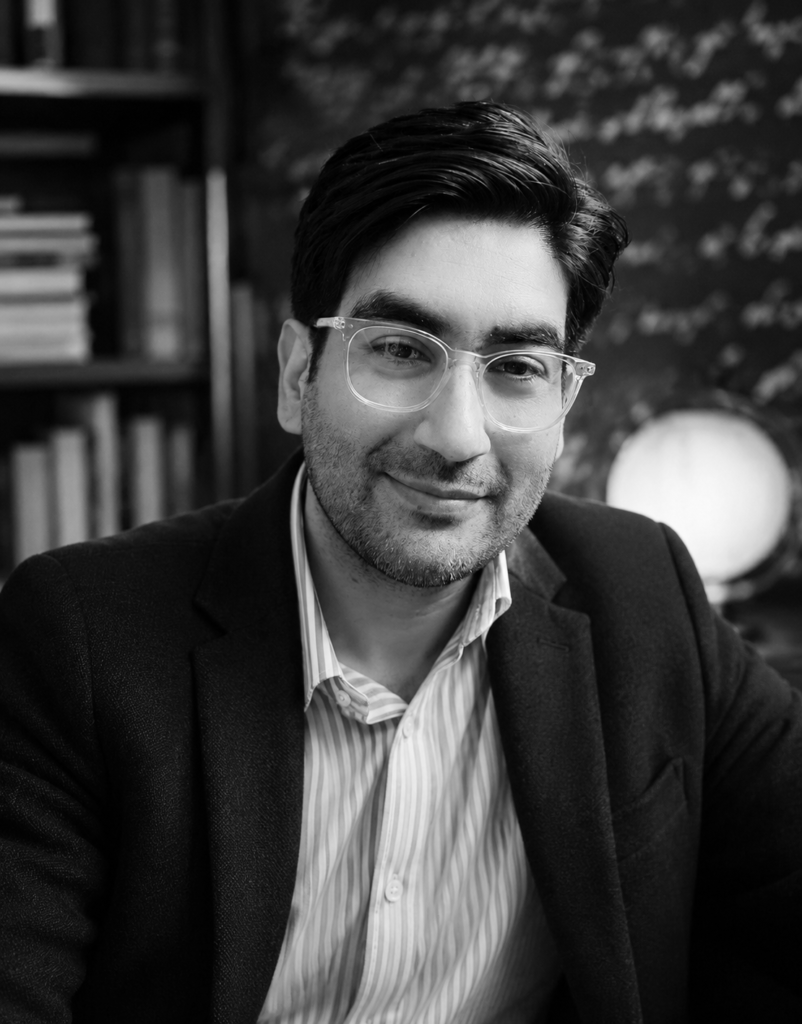
Dr. Ghulam Mohammad Khan is a writer and academic from Bandipora, Kashmir. His work resides at the intersection of narrative art and critical thought, exploring how stories shape memory, challenge power, and map the interior lives of individuals within contested histories.
He holds a PhD in English from the Central University of Haryana, where his research focused on narratology and the mechanics of memory in postcolonial literature. Khan is the author of the book: Anecdote, History and Kashmir: And Other Essays (2025), a collection that interrogates dominant discourses through literary critique and counter-narrative. His short stories and essays have appeared in respected literary journals, including Indian Literature (Sahitya Akademi), The Indian Review, Out of Print, KITAAB, and Kashmir Lit.
Fascinated by the subversive potential of language, his writing consistently bridges rigorous analysis with intimate portrayal. Presently, Khan works as an Assistant Professor at HKM Govt. Degree College Bandipora, Kashmir.
_________________________
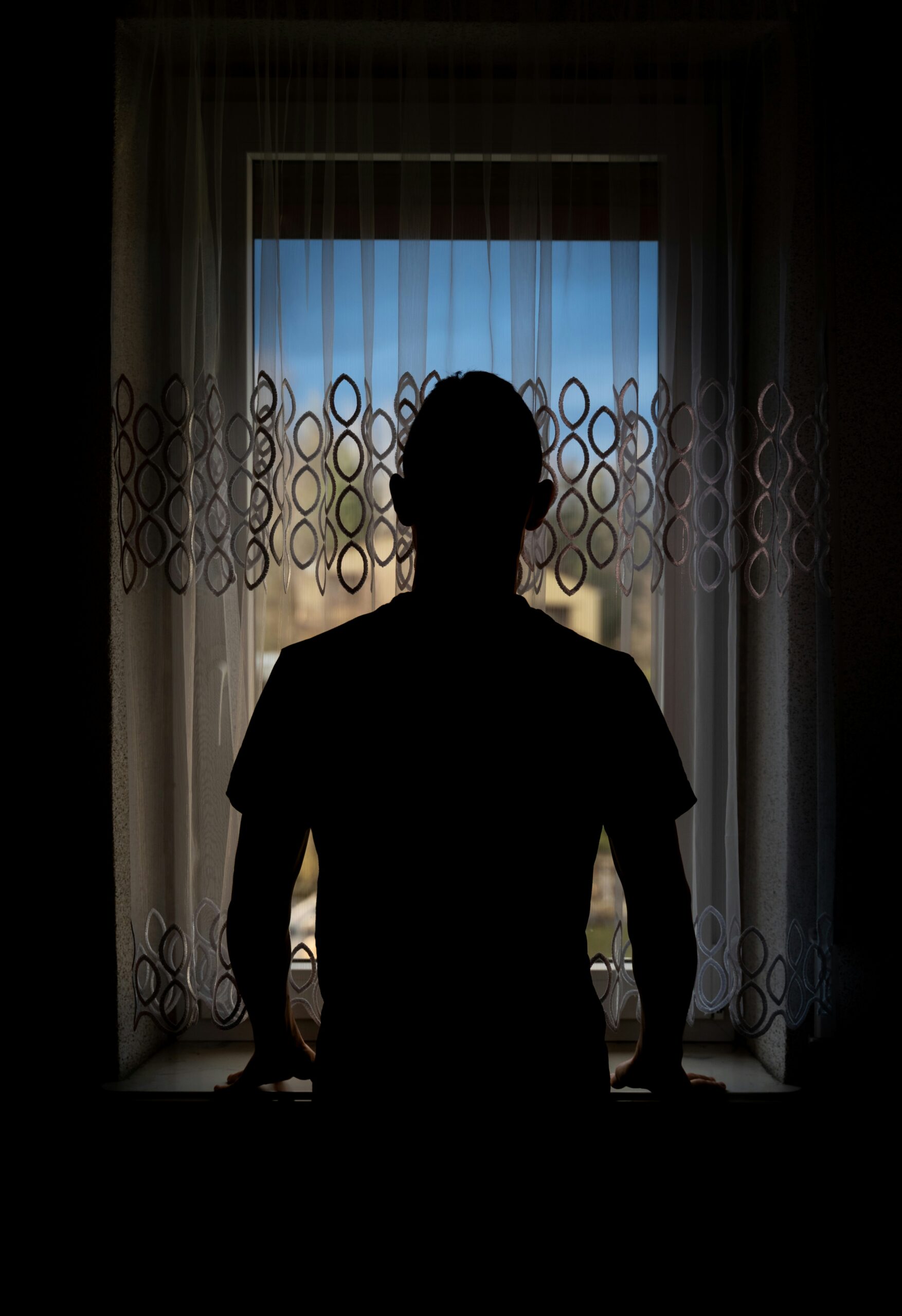
Photo by Damian Barczak on Unsplash
Find MeanPepperVine on Instagram @MeanPepperVine