| Dr. Aparna Salvi Nagda | April 2026 | Short Story |
He was one amongst them. As if this were the place to be in prime youth, he had surrendered. On 7th July 1962, the military regime violently suppressed a student demonstration at Rangoon University attended by some 5,000 students. Under the regime of General Ne Win, the military demolished the main building of the university. This resulted in more than one hundred deaths and the arrest of around 6,000 students, according to unofficial sources. The real numbers could put God to shame. But he was not the one to believe in God. If God were indeed the supernatural people had faith in, then today, he wouldn’t have been cradled by prison chains. His mother’s loving arms would have wrapped themselves around him.
Burma
His favourite colour was grey. Not the pleasing kind , but banal, shabby, and worn-out shades of grey. This was the colour he had first opened his eyes to. The colour of the umbilical blood too, appeared grey to him. They said babies had a monochromatic vision. He felt he was a baby all his life. An abandoned one.
Never could he see the whites or the blacks, blues or the reds, forget about the magentas or aquamarines to the world. To him, only the colour grey obliged.
Swine, they called him. Hera, he called himself. Burmese jail authorities arrested Hera, a Rangoon university student and prisoner, for revolting against the General’s rule. The cause wasn’t important to Hera. The urge to rebel had to be satisfied. An innate storm that was deep-rooted in his genes drew him to these grey walls and their stingy corners. In the five by five feet enclosure that housed fifteen other students like him, he felt at home. Once in fifteen days, he could lie on the floor, damp with urine and faecal matter. Other days, he leaned on the grey walls and appreciated the art forms made on it with the blood of previous and some current prisoners. Scarlet, crimson, madder to burnt umber, wenge, and smoky topaz; the shades changed colours.
But the grey remained as grey. Like a faithful servant, it stayed obedient to its master. Hera believed he was the master of this palette of grey. For he was born here, and inevitably, going to die here, too. But before that, he had to see her. He wanted to call her mother. The desire vanished as soon as it came. If she were a mother, she wouldn’t have left him at the mercy of the Burmese government. She was just a plain woman who had fallen in and out of love, like his desire to call her mother. Quick and abrupt.
The Islands
Maria fished a large turtle out of the clasp of the ferocious waves. With squinted vision, she watched the drowning sun. The sea leapt out at her feet like a famished monster. Little crabs pinched her calloused feet. Marine water dripped from the folds of her saggy skin. Maria was a halophile. She loved every sodium ion of the sea. It was all she had. It was all that she carried, oceans of animosity and reticence. Despite harbouring a sea of turmoil, Maria could never shed a tear of grief, a tear of longing for the sole survivor of her womb, the beat of her heart, and the thump of her pulse.
How she wished she had hugged him a little longer before the jailor snatched away her most prized possession, sink in the fragrance of his fresh skin, and immerse in the music of his tiny drumming heart. What if she had rebelled? They would have killed her, and that would have saved her from dying every day in his memory. She couldn’t call it a memory either. A flash of his jet-black eyes. A fraction of his pink lips. A hazy picture of a wailing baby being carried away. It was all a blur.
The turtle was a big catch for her petite figure. On her hunched back, she carried it with pride and pomp. For the next fifteen days, she would slowly and patiently savour each of its parts. Hunger would be at bay until the next full moon. Back in her mud hut, she placed her treasure in a large trough. The turtle’s large, grey eyes watched her in anticipation. She would cut its feet one by one, and attend to its amputated limbs like a diligent nurse. To preserve it for a whole fortnight, she had to keep it alive. The eyes haunted her, so she took care to cover them with a damp longyi.
Hunger was a horrendous monster, especially for the tribal woman convicted of murdering her husband. After serving her term, the authorities deported her back to her country. The country she knew. The islands of Andaman, nothing more patriotic, and nothing less personal. The authorities deposited many women, similar to her, on the islands after the Burma prisons had enough of them, like crustaceans cast ashore.
Maria had been the firstborn of the Teetop hamlet when tsunamis and earthquakes had forced the Riang tribe to migrate to this isolated island. The Christian Missionaries had named her after the Virgin Mary. Who knew her fate would also turn out to be the same? At the ripe age of fifteen, she fell in love with a Burman and fled her country via a dinghy that battled the Kalbaisakhi storms of the Bay of Bengal to touch the oilfields of Burma. Her love was to blossom amidst decades of civil strife. It was to bring springs of happiness to a war-torn country. Her teenage years knew nothing of adult cruelties. From her blind love, a child with crossed eyes was born.
Burma
The grey skies were heavy with its inhibitions. It won’t be long enough before they would give way . The waters would break with the turtle being caught in the net. Trapped! The turtle beat its feet fervently. The fibrous net choked its breath. Yet, it didn’t stop marvelling at the grey skies. Grey was, after all, its treasured colour. A flip pulled it out of the blue waters. Still, cold water hit its face. Though the water was its home, this splash hurt.
“YOU SWINE! How dare you sleep without the jailor’s permission?!”
A bucket of icy cold water was splashed on Hera’s face. The nightmare was an everyday affair. Hera opened his eyelids, where the lashes had been scalded with hot water, and smiled a toothless smile. There was nothing that deterred him from smiling. His grandparents told stories of how he was born smiling in prison. Maybe the grey made him happy. Having a little mercy on him, the junta had handed him over to his paternal grandparents. After all, his mother was serving a term for killing his father, a Burman who worked on the oilfields. That was all the facts he knew about his parents. He went ahead to form an image of his mother. He couldn’t picture his father, as people rarely judged the dead. Only the survivors stood guilty.
“I want to write a letter.”
With a squint, he dared to look in the eyes of the jailor. The pink tissue from the territory of flesh deprived of its skin shone like an island. Rodents or cockroaches, Hera didn’t recall who had titled this patch. On one night when he had the luxury of kissing the bare floor, the offended arthropods must have taught him a lesson. They were, after all, surviving on the General’s food.
The General Ne Win government had released most of the student prisoners after a year, but not Hera. His endurance of torture irked the jailor. The protests ushered in a new era for the university students. Hera was still bound by the grey walls.
He fought for the right to his land. By his father’s grace, he was a native, a native imprisoned for asking for his right over his education. Hera was, anyway, deprived of the knowledge of why his mother had left him. Education was his means of rebelling. Rebel, he must. His sturdy shoulders drooped, yet his ambitions stood tall.
They did not kill Hera. They informed him that his mother had murdered his father to run away with a Christian missionary from the Andaman, her hometown; and she did so after her release for good behaviour. Was she really good? There was no point in pinning for the truth. His hardships had whispered to him that truth came in all colours. His mother’s truth could be his lie. He lacked the nerve to face the truth. It was easy to rebel with wrath controlling his chariot, but difficult to sit cowered under the shadows of the gospel truth.
After years of bitter hatred, Hera wanted to write her a letter today. He wanted to immerse her in guilt if she had any inkling of his condition.
“So our Marco Polo here wishes to write a letter. Won’t be taking any of your piss!”
The sarcasm, along with the whip, lashed on his arm. A deep gnash split into crimson profanities. But the lisped tongue couldn’t even wince. It obeyed like the grey walls, which never lost their identity even amidst the jets of red and brown.
Islands
Maria chopped off one appendage of the turtle. The minced meat cooked into gruel would pacify her growling stomach for two days. Before cooking it on the stove, the single symbol of her riches, she bandaged the bleeding stump. Christianity had infused some humanity in her. She would have bandaged the slit throat of her husband had she experienced this magic of religion and faith before the junta declared him dead. Had this faith worked its magic on her when in Burma, Maria would have sought refuge at her husband’s feet, believing he would not kick her eight-month swollen belly!
When the Burman kicked from outside, the baby kicked from within. Why was she subjected to this dual torture? Was this the reason she had never desired to see the kicking offender’s face? Who knows what boiled on the stove and in her heart every day? Only grey wisps of smoke emanated from the shanty.
Was grey her favourite colour, too?
Burma
Inside the net, the turtle found a place of quietude with its entanglements. It rode on the proud back of its benefactor. The grey skies had cleared, yet it could see specks of grey floating on the whites. Little muddled cotton balls traversed the expanse of clear skies. Constricted by the fibrous mesh, the turtle enjoyed the glory of grey streaks left after a wash of rain and thunder. Suddenly, all went dark. A blackout prevailed.
SLASH!
A dagger chopped its feet in the blink of an eye. Deep agony of betrayal cried. The stump could feel its companion being minced into fine pieces. It realized it was composed of millions of breathing pieces, each destined to be further minced into millions more.
Hera got up, perspiring from his dreams. Ironically, these weren’t wet dreams. He laughed to himself. Today, they granted him permission to write a letter after he threatened suicide by going on a hunger strike. The strike had left his muscles craving for water and meat. The turtle in the dream seemed a good option. How would it feel to chew its feet? His flesh cooked on a stove in Teetop. Yes, he remembered he had to send the letter to Teetop village in the Andaman. That was the legacy his grandparents had left. The legacy was an address where he could find his mother. Maybe after running away, she had the money to fight his case. Maybe she didn’t have to think of eating turtle flesh for survival. The letter would end the procrastination.
Knackered, his hand trembled. What would he write troubled him over how he would write with a chop in his arm. Yet, he wrote to remind her of his existence.
The letter, after scrutiny checks, travelled across the Bay of Bengal.
The Islands
Maria turned off the stove. She had killed the dead meat. With no options left, she stirred a ladle and poured herself some charred gravy. The grey colour of the gravy haunted her. With no condiments and spices to flavour it, the meat was a discoloured ball of dissatisfaction and annoyance. She was annoyed with her life.
The Burman had long ago killed her desire to live. Then why on these islands did she struggle for some mass of food? For whom was she waiting every day on the shores? As the sun washed itself in the brine waters, she wished a hooting ship with him would come. He must have grown up now, with sturdy shoulders and lanky legs. Very disproportionate, just like his father. Twenty-five, that must be his age, if they had fed him and kept him alive.
Maria stared at the grey skies, nudging the sand and gravel on the shore to carry her longing across the sea. The sun had immersed itself in the incognito pool of turbulence. As the sea swallowed the solar mass, it fell silent. Maria slurped the gravy sitting on the shores, the meat floating on the grey gravy. Her turmoil felt at peace. He would come searching for her, the calm self told her.
The grey skies offered hope.
Burma
Hope was the tinge of grey that was diminishing from the wall. It was now more of crimson progressing to burnt brown. Hera ran his fingers through the streaks of grey that were dying a slow death. The jailor, with much disgust, had agreed to send his letter. The scrutiny had declared it to be safe to reach his mother. It was a dying man’s wish to see the channel of his birth. What would she look like now? Did his lanky legs find their strength from her, or was the squint her gift? How was she? Who was she?
A mother?
A traitor?
Or only a woman sharing the grey skies with him?
The last suspicion brought him an inch closer to waiting for her arrival.
A whip landed on Hera’s other arm. The Insein Prison was a human slaughterhouse. They murdered the pigs with human touch, but not men. Life and death held the prisoners in suspense.
Islands
The turtle swam in the little waters of the trough. The amputated parts were giving it less pain over the anticipation of looking into the eyes of its caregiver. Thankfully, she had veiled its vision with a longyi. SLASH!
Carefully, she twisted the other broken limb and dismembered it from the turtle. Her hut was a slaughterhouse of human and amphibian emotions. Like her, the turtle also hung between life and death, yearning for death. But for both, it won’t come so soon. Today she had to simmer it.
A loud knock thundered on her tin door.
“You have mail.”
The mail carrier left as unceremoniously as he had come. No signs of excitement. Who on earth was alive to write a letter to her? Had the setting sun heard her clamorous prayers?
Maria read the letter and knew that she had to go. He was dying, and it was her first and last chance to meet him. She immediately rushed to the church. She sold her little hut and the sooty stove. Packing her meagre belongings, she headed towards the coast. The ship waited, or that’s what she perceived. The final lock and another shore waited for her arrival. Just when she was about to cross the threshold, Maria heard the trough move. It was still alive. Hopefully, he was too. She had no appetite to pursue it further. On her back, the crippled turtle traversed its journey to the sea. On the shores, she dropped the animal and then boarded the ship.
Waiting for the sail, their eyes met for the second time. She was sorry for the turtle’s state. Limbless, it stared back at her. It craved her torture. It craved death.
Burma
Hera was given a bath. His hair was trimmed and brushed. Today, he had a visitor. Three years, none apart from the jailor, centipedes and cockroaches had cared to visit him. All in the ascending order of importance. The junta cared to present their guest in the best possible manner. With crippled arms, Hera trotted towards the courtyard where he would see her. As always, he wasn’t alone. A centipede tugged at his new but tattered trousers while a guard dragged him along.
Hera squinted in the bright sunlight. She stood under the tree. He knew it was her. The petite figure was a concoction of guilt, longing, remorse and trapped conscience. He stopped midway. He had no energy to continue.
She recognised the squint, the sturdy shoulders and lanky legs. She broke down on seeing his scalded face and crippled arm, his congealed blood and the crusty scar.
He just stared back and smiled. The broken teeth and cut tongue refused to make a show.
For minutes, they stood transfixed. None could take a step further.
Her labour pains came gushing to her. His umbilical wound pricked him. The word ‘mother’ surfaced in his mind, but his lousy throat swallowed it. It was too much of an effort to call her mother. In the moment of solitude, he spun back and proceeded to the comfort of grey. The bright shades weren’t for him. He achieved his purpose of seeing her. He couldn’t spend the rest of his life consumed by a longing to live with her. Death was closer.
The centipede rolled onto his skin. There was no dearth of blood for it now.
Dazed, she wept in denial of his denial. It was now her turn to die, hankering for him.
On the Islands, the turtle slipped under a grey rock. The bright sun scorched its skin. It waited for Maria to return and make a stew out of him, this time not sparing a single part of it. It was destined to die anyway.
GLOSSARY:
Longyi– a type of Burmese clothing
Junta– a regime composed of military officers.
_________________________

Dr. Aparna is a consulting homeopath and child counsellor by profession. She moonlights as a writer. The Labyrinth of Silence was her debut novel published by Vishwakarma Publications in 2024 and the book has won the runner-up position at the Authoropod Awards and was longlisted for The Wise Owl LIterary Awards. Her short stories have found a home with The Wise Owl, USAWA, and BENTO magazines.
_________________________
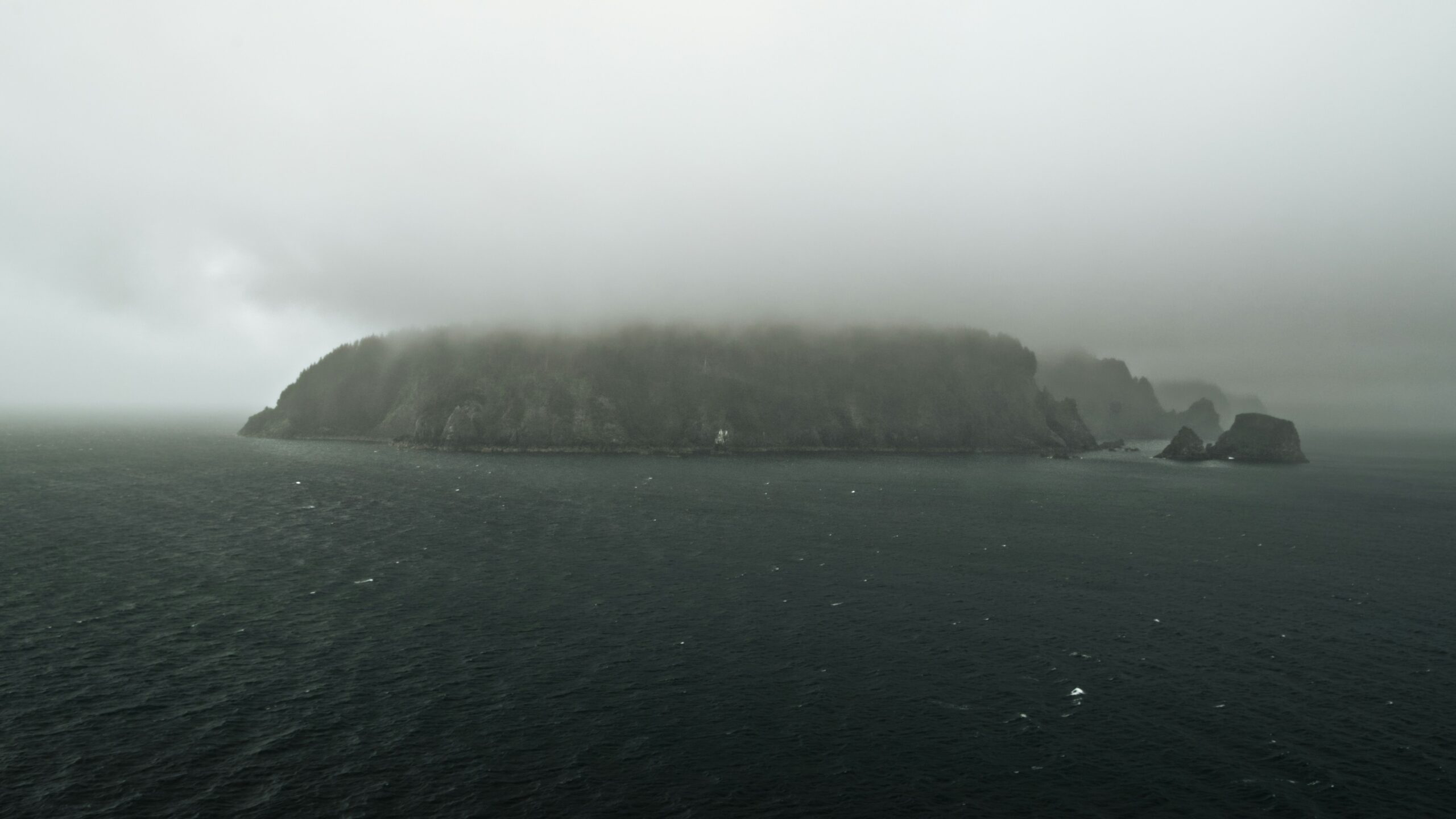
Photo by Dan Palen on Unsplash
Find MeanPepperVine on Instagram @MeanPepperVine


Bittersweet relationships torn asunder by elements beyond our control. The symbolic correlation between The turtle and Maria is extraordinary.