| Mahima Kohli | October 2026 | Short Story |
It’s past four in the afternoon and a cold draft whistles about the empty cafe. The last time I looked up from my book, the lunch crowd was beginning to dwindle. I get up to order another cup of coffee and stretch my limbs. The waiters are idling on the balcony, quietly passing a cigarette back and forth. Their faces gleam like statues of gold in the setting sun. I lean over the parapet, arms outstretched to soak in the last rays before katabatic winds descend over the valley. It’s my last night in this town, and I don’t want it to end.
The street below is narrow and buzzing with activity. My gaze wanders to a foreign-looking couple gesturing and talking loudly in a language I can’t place. Nestled in the man’s arms is a dog that looks like an angry rat. A Pomeranian marches ahead in a quilted jacket and matching leash. I suppress a smile. What sort of people do you have to be to own such tiny, ridiculous dogs?
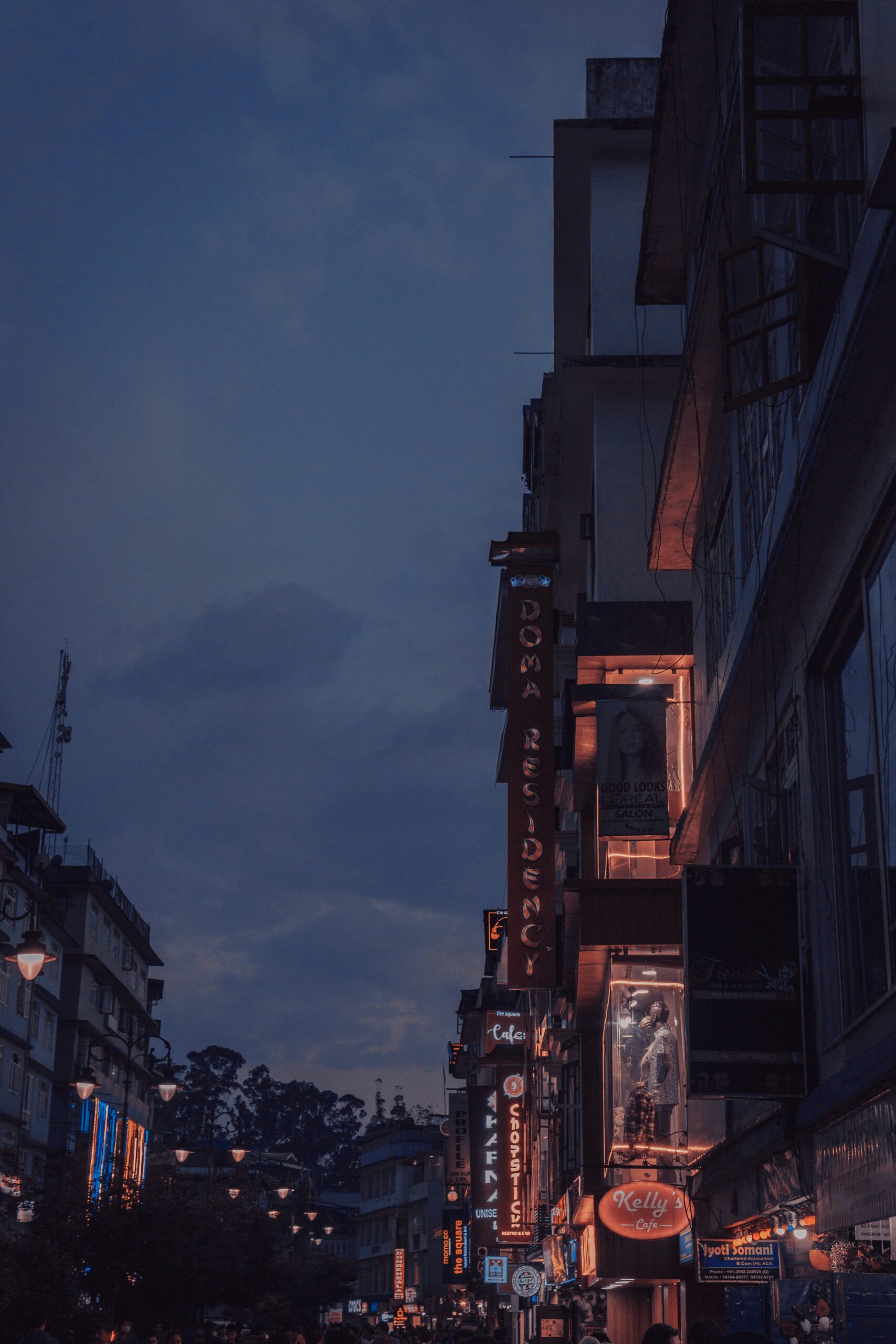
The other side of the street is lined with shopfronts that on a closer look are no more than tarp-roofed shanties with makeshift tables and a motley of curios on offer—scratchy knitwear, junk jewellery, evil-eye bracelets, dreamcatchers, and other meaningless objects you tell yourself you’ll use but never do. I’d planned to take back souvenirs for our friends—the husband’s friends, only mine by marriage. They bring back trinkets for us from all their travels, to Ethiopia, Bhutan, Costa Rica, with stories rich in colour, adventure and discovery. I wonder if I’ll find anything in this tiny hamlet to match the novelty of what all they’ve seen in their years of globetrotting.
By five-thirty, the light is receding and the sky above the northern mountains is a deep orange. Having exceeded my daily allowance of caffeine, I pack my things and head to the hotel. The street curves upward around the hill, with no vegetation in sight. These mountains, once covered in dense forests of deodar and pine, have been cleared and apportioned into smaller and smaller plots of land run over by hotels and eating joints. You have to climb to the top of one of the tall buildings now to catch a glimpse of a single native tree.
Halfway up the slope, I’m out of breath and pause to look inside a shop aglitter with neon signs. There’s an assortment of antiques with masterful woodwork and intricately carved metal on display. I run a finger over the delicate filigree work on a bronze statue of a female deity. If only our flat in Bombay had more space.
The shop is built like a system of caves, each section leading you deeper into a maze of rooms. I take time going through the collection and making small talk with the shopkeeper who is at my tail. He proclaims, with remarkable pride, that most of his wares are brought in from other places. Bengal, Rajasthan, Delhi, sometimes even Nepal. Trying to conceal my disappointment, I ask if he has anything that was made locally and might have an interesting story. The man leads me to a rack of shelves crammed with Tibetan souvenirs—singing bowls, temple bells, prayer wheels, and statuettes of the Buddha in various poses. I exit the shop and walk on.
***
I first came here at the age of seventeen with my parents. Back then, the town looked nothing like it does today. No artisanal coffee shops, no gourmet restaurants, no gondola rides or antiques brought in from elsewhere. On that maiden trip, we made entire meals out of junk food my mother would never allow inside our home. Maggi noodles and Nescafe, cheap cream rolls and aloo patties, sticky rainbow-coloured pastries from the only bakery in town.
The three of us shared a room in a mid-range hotel, sleeping and waking to each other’s rhythms like roommates in a dorm. We walked everywhere, often losing our way, then asking for directions to the main square and starting all over again. There were few shops around, solid brick-and-mortar structures selling souvenirs hand-carved from local cedar and pinewood. My parents bought everything—keychains painted with all our cousins’ names, tiny carved figurines of owls and cats, a model train set, a pencil case, a large jewellery box with red felt lining. My mother, with her characteristic mix of mirth and emotion, promised to give me the box on my wedding day, filled with all her favourite jewels.
She never got to use the jewellery box. A car accident took her away within days of our return. The house grew quiet, and the felt-lined box made its way to the back of my closet, stuffed with all the pinecones I’d collected on the trip. Leaving for college, I promised my father we would return to the town every year for a vacation, just the two of us.
And for a few years, we did return. We would stay at the same place and do the same things, until it got too difficult for him. Resolved to keep my promise, I kept returning year after year, with friends and lovers, until I got married. I’ve seen everything about the town change, save for its comforting smallness. You can still get everywhere on foot from the main square. All it takes is stamina and time, of which there is no dearth here.
My last visit was with the husband in the first year of marriage. We couldn’t afford a lengthy honeymoon on his legal intern’s salary, and I leapt at the chance to show him the place that to me felt more like home than anywhere else. Eager to please his family, I also brought back souvenirs for everyone, including a brass prayer wheel encased in a carved wooden frame for the mother-in-law. The hollow cylinder of every Buddhist prayer wheel is stuffed with scrolls inscribed with Buddhist mantras. They say every clockwise spin is an act of prayer. But the prayer wheel, untouched in its plastic packaging, still sits atop her fridge gathering dust. Whether the Buddhist nature of the present offended her Hindu devoutness or she thought it was too cheap a trinket to display in her home, I never found out. But I did learn not to waste money on spiritual keepsakes.
***
Art. Surely they love art. I could get them a thangka. A replica, obviously, for the price of an original Tibetan scroll painting could set you back a month’s salary if not more. The husband would never allow such a splurge for our own home, let alone for friends. It took considerable effort just to convince him to renovate our flat after the monsoon came wrecking through the walls.
“It’s a waste of money,” he said. “Renovating a rental is the landlord’s job, not ours.”
“But we both know the landlord will never do it.”
Lakhs of people live with a little water damage in this city, he’d said. Madam, please adjust for another year, then we’ll re-evaluate.
“We’ve adjusted for long enough,” I pleaded. “Let’s just do it. We can always take our things along when we move.”
“We’ll buy new stuff when we move into our own home,” he said, reaching earnestly for my hand. I pulled back. Our own home. As if we were paying guests in someone else’s home.
I’ve always lived in places I didn’t own. Every move brought with it new mementos of the lives I’d lived. Childhood pictures, polaroids from college trips, yellow-and-white striped curtains, mould-ridden boxes full of books, DIY lamps made from wine bottles and string lights, each object carrying a story of its own. These stories travelled with me like talismans as I shuttled between pin codes and lives, never wondering if the spaces I occupied belonged to someone else.
But I said none of that to him. He, who has only ever lived in one place, known one definition of home, with its depressing grey curtains and mismatched furniture. I knew he wouldn’t understand. So we reached a compromise. A fresh coat of paint, strictly no textures or highlight walls, and some wall art and curtains, a crockery cabinet, a bright yellow reading chair I had my eyes on. His only two directives: to achieve maximum effect at minimum expense, and to move the TV into the guest room so he could watch his late-night sports telecasts in bed.
It took three weeks of arguing with the contractor, looking for cheap art online, comparing prices along the length and breadth of the furniture market, until my work bore fruit. Every corner of the house shone like a freshly scrubbed bride after her haldi. That weekend, we hosted his friends for dinner. He gave them a full tour, and as they ooh-ed and aah-ed over the little details I’d poured myself into, he beamed with pride. Our first home together, he proclaimed, draping an arm around my shoulders. I didn’t point out the irony.
***
At a fork in the road, where the right path would’ve led up to the hotel, I took a left towards the main square, and I’m now face-to-face with a decades-old resto-bar where once my parents shared a beer while I ate a large plate of fries. I find my phone and call my father. He doesn’t pick up. Maybe he’s taking a nap or gone out for a walk and forgotten his phone. He’s been forgetting more lately. As I think of plausible explanations for his silence, my heart sinks deeper into my gut with each unanswered ring.
A minute later, he calls back as I’m climbing to the rooftop bar. He chuckles when I try to scold him for keeping the phone on silent. “Guess where I am,” I yell over the loud music, switching to video mode to show him the dimly-lit stairwell lined with pictures of yesteryear’s celebrities enjoying their meals. He squints at the screen, and I see signs of recognition beginning to ease his knotted brows. Then he frowns. “What sort of a rave are you at, bachche?”
I let it go, instead pointing the camera at the corner table we sat at years ago. He asks if the Bombay boy—that’s how he addresses the husband—is enjoying himself. I hesitate, then say he is downstairs ordering us beer and food. “Ah, yes, how could I forget? You’re old enough to drink now.” My throat constricts. “Just remember to soak it up with fries.” I inhale long and hard, trying to dredge up words that seem to have lodged themselves deep inside my throat. It’s been months since I saw my father, touched his sallow, smiling face. I want to tell him I miss him. What comes out is far less eloquent. “Those fries will kill you, you know. Are you still taking your cholesterol medication? I should give doctor uncle a call.”
***
Darkness exerts a firm hold over the valley as I trudge back up the hill. My room is a cavernous log cabin with exposed wooden beams, a king-sized bed and a bathtub meant for two. I’d begged him to come along on this trip, to take a break from his never-ending work, to try to recreate the excitement of that first year. He said he had hearings lined up this week but promised to try. I didn’t mention that this trip was his mother’s idea. That she’d taken to calling me every week, reminding me of the ticking clock, asking if we are doing everything right, if we might not do better with some professional help.
So I booked us a room on top of a hill, with panoramic views of snow-capped mountains and an actual fucking fireplace. But when the day came, he couldn’t tear himself away from the office. I boarded the flight alone.
***
I run a hot bath and start rounding up my things. In the last three days, I’ve finished reading two books and crossed the halfway mark on a third. I’ve made several rounds of the town, stopped at countless trinket shops, paid obeisance at old haunts and sampled the food at some of the newer cafes that have cropped up since I was last here. I lay out all my purchases in a neat row on the bedspread. Handwoven satchel for the sister-in-law, a silk shawl for the mother-in-law, picture postcards for my father, porcelain fridge magnets shaped like Chinese urns for friends, and a set of gold-rimmed wooden coasters for his senior partner. Then I remember the pinecone.
Hidden away all this while in an inner pocket of my backpack, it was an impulse purchase on my first day here. The shopkeeper, a young man from Bihar, told me he had moved to the mountains five years ago and made a decent living selling trinkets and driving tourists around in his second-hand Alto. He said he’s getting married next month to a girl from his village. Then he thrust a tiny, brightly painted pinecone in my hand. “She paints these by hand. I’ll make her my business partner when we’re married.”
My phone buzzes, cutting through the silence. I haven’t had a call from the husband in two days. What are the odds of him thinking about me at this very moment? But of course it’s not him. Just a text from the airline reminding me to complete the web check-in if I haven’t. I let out a laugh and turn it off.
I stuff everything into the suitcase and snap it shut. Then I strip and lower myself into the steaming bathtub. The night is darker in the mountains, turning the picture window into a mirror. In the reflection, I spot a corner of the silk shawl peeping out of the suitcase on the luggage rack. If it’s caught in the zipper, the fabric will develop a snag and unravel. Instinct pulls at the threads of my consciousness. Get up, dry your hands, tuck the shawl safely back in its place. Instead, I watch as the fabric flutters in the draft from the heater, lifting and falling so gently it’s almost imperceptible.
I stretch my toes until they reach the other end of the tub, pulling my body deeper into the water. I close my eyes and picture the pinecone wrapped in old newspaper, tucked away from the rest in a corner of my backpack.
When I open my eyes again, I no longer see the shawl.
_________________________
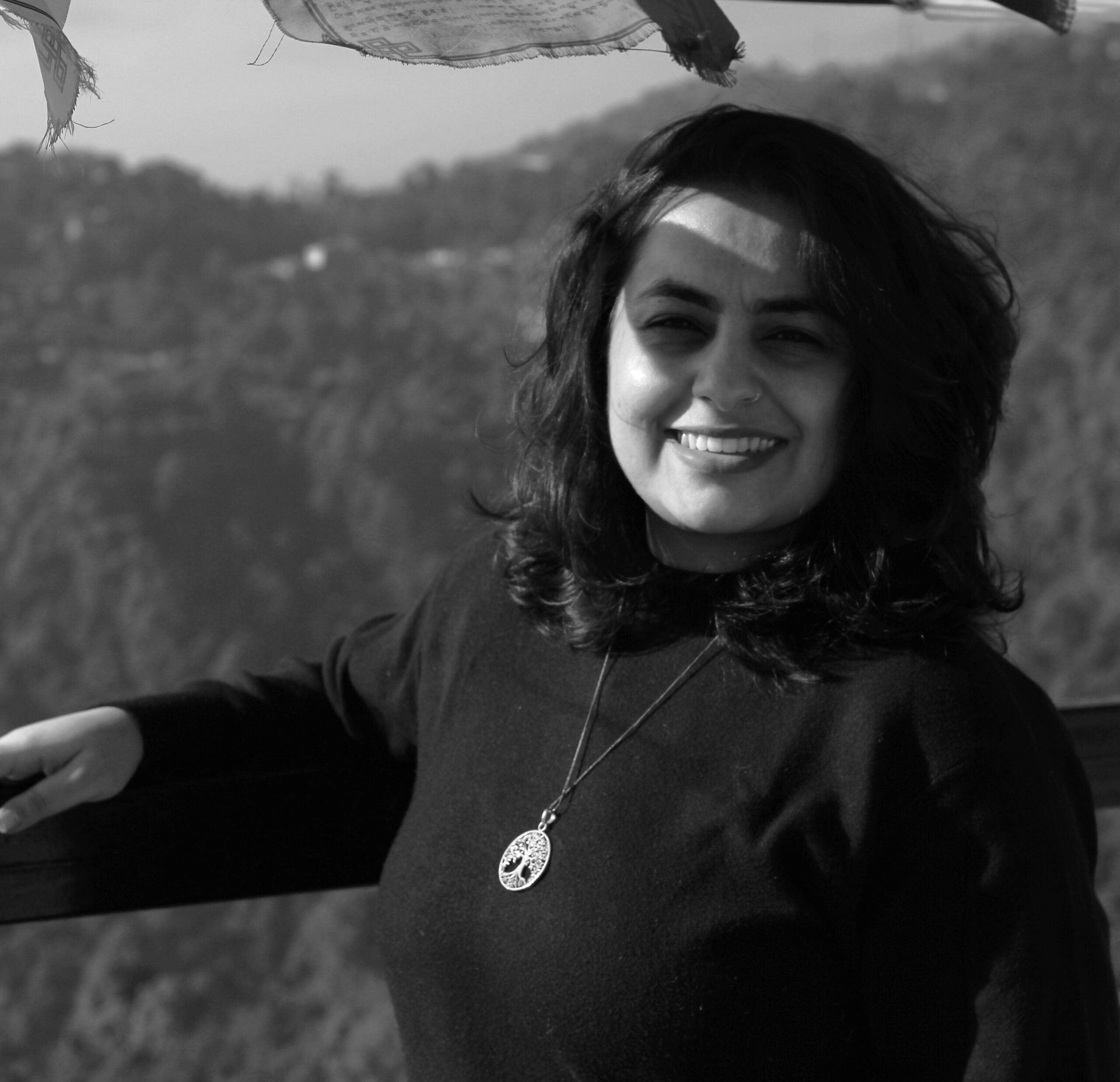
Mahima Kohli is a Delhi-born writer based in Mumbai. An alumnus of the the Himalayan Emerging Writers Residency in Uttarakhand and the Young India Fellowship at Ashoka University, she has been writing across formats for sixteen years and has edited a dozen books. Her fiction has appeared in Gulmohur Quarterly and has been adapted into bedtime stories in three languages. She is currently working on a novel that looks at marriage, identity and family from an urban Punjabi lens. She loves coffee, books, travel, and spending time by herself. She works a day job in taxation to pay for all that. You can connect with her on Instagram at @kohliaroundtheworld.
_________________________
Photo by Divjot Ratra on Unsplash
Find MeanPepperVine on Instagram @MeanPepperVine