| Sharika Nair | July 2026 | Short Story |
We wait at the park for Maria and Joseph to arrive with… ‘her’. My palms are clammy, which I hate, and I wipe them on my kurta. Akhila sits on a bench near us, reading an Amar Chitra Katha that I had borrowed for her from the library last week. Last week… before all this upheaval, before this madness began. I envy the child’s oblivious calm, cut off from her parents’ fidgety anxiety. Shyam drums his fingers on the seat of a seesaw, a restless tap-tap-tap. When a modest white Alto hatchback arrives with ‘them’, I hear Shyam exhaling, as if he is preparing for the toughest moment of his life, which it probably is.
Maria is stone-faced, Joseph awkward. ‘She’ is holding on to Joseph’s elbow.
“Hello uncle, hello aunty,” she says with a bright smile before any of the adults can figure out what to say.
My voice refuses to cooperate. I cannot look at her for too long. It’s like trying to look at the sun, but my little glances at her strike gold. Jawline like Shyam. Wavy hair like mine. An infectious smile like my beloved late father. Thankfully, Shyam takes over before the silence becomes too uncomfortable.
“Helloo princess, what’s your name?”
Although we already know.
“Celine,” she says, her smile even wider as she turns to look at Akhila, who has sidled up to me and is standing gawkily beside me, half hidden behind my dupatta. Maria steals a few glances at Akhila, but otherwise ignores her, and it irritates me even though I just reacted the same way to Celine. I want to grab her face and say – Look at her! Don’t ignore her, she’s a sensitive child.
Joseph points to the park behind us, “Celly, go play with Akhila,” and we watch as the kids wander off towards the swings.
***
A blood test. A stomach pain in the middle of the night. Such innocuous events had led us to this moment. Though there might have been something twisted behind it all. Two nurses. Just negligence or something more perverse? We will probably never know.
Shyam and I met at work. His parents and my mother got along well enough.
We brought our daughter home from the hospital two years into our marriage. It turns out now that we hadn’t.
Shyam and I took to parenthood like a pair of land-raised ducks to water. We agreed on most things, and the ones we disagreed on were too trivial to matter. I took a maternity break for eight months, the maximum possible without having to quit my job, and my mother stayed with us for four months till we started sending Akhila to the crèche, once she turned one.
We would visit my amma for lunch on Sundays, so she got to feed Akhila her favourites, potato varuval or sago payasam. We would spend a couple of weeks with Shyam’s parents in Madurai, coinciding with his sister’s annual visit from the US.
Akhila was undemanding even as a baby, a bookworm from when she learned to read. Teachers always told us, “She is a good kid, a little too reticent though. She needs to speak up more and participate in class.”
Loud noise always upset Akhila. From going out to pubs every weekend with friends, to playing Scrabble or Uno at home, we gradually became homebodies.
“We have become such boring people, Shyam; regular jobs, one child, two-bedroom apartment, PTMs and EMI! There’s no adventure left in our lives,” I remember half complaining to my husband just over a month ago. Shyam had rolled his eyes. But now I worry if I jinxed my own happiness.
Akhila had woken up one night crying from pain. Her doctor diagnosed appendicitis and recommended immediate laparoscopic surgery. Her blood was tested in case she needed a transfusion. A+ve. That’s not possible, Shyam and I said. Her birth records stated O+ve. They tested again with the same results. The doctor asked for our blood groups. That’s impossible, he said. Parents with O-type blood cannot have an A-type child.
Shyam and I had our biggest fight that night in the brightly lit hospital corridor. Akhila was asleep in the room; the anaesthesia had worn off, but the strain of the surgery, the IV in her wrist, alongside the string of doctors and nurses poking and prodding her, had tired her out.
In the deserted corridor, I hissed the words at Shyam that I could never take back, the ones he must have been telling himself already. “You were careless! You should have stayed with the baby throughout.” Shyam looked like he had been slapped. As we growled accusations and counter-accusations till a passing nurse glared at us, I had a sense of things slipping out of our control.
I had baby-proofed our flat long before Akhila started crawling. Panicked from reading news stories of children being abused in daycare centres, I had questioned her about her day in her toddler years, to reassure myself that the daycare staff were taking good care of her. I would even examine her body while giving her a bath, looking for signs of beatings or scratches. Shyam gave in to my insistence for regular medical check-up for both of us. We had to stay healthy now that we had Akhila to take care of. In all this, I never once imagined Akhila would turn out not to be Akhila. But wasn’t she Akhila?
When she was around ten months old, we were both sitting on the floor of our balcony, looking out, on a quiet Sunday afternoon. My mother was visiting her sister. Shyam was taking a nap. I pointed out things to Akhila. “Maram… say maram”. “Car… say car”. She would grin and point, imitating me, though the words were still too difficult for her to say. Suddenly she turned and looked at my face with great focus and said “amma”; it sounded more like mmma. I stared, then clapped excitedly, “yes amma”, I pointed at myself. She repeated the word several times, looking proud of herself, mma…mma…mma, smacking her lips each time she made the sound.
I researched online articles on babies exchanged at birth. In cases where the error was discovered before the babies turned one, they were usually re-homed back with their biological parents. Older children were usually not uprooted (not surprisingly) from the only home they had known since birth.
One evening, a couple of days after the surgery, Shyam walked into the kitchen as I was pouring idli batter into the steamer. He had just got off a call.
“That was from the hospital.”
The last few days had taken their toll, and he looked haggard, dark circles under his eyes. We were both not sleeping well.
“There was only one more baby born on August 10th 2017 between 2 and 4 pm. While ours was normal delivery, theirs was Caesarean. The hospital management has concluded that the babies were taken for their first bath by the nurses at the same time, after their blood was drawn and weight checked. That’s when…” his voice trailed off.
We met the hospital representatives along with our lawyer soon after, with the DNA test report. They told us that both the families would be paid a compensation of Rs. 10 lakhs each, with the implied stipulation that the news wouldn’t reach the media and ruin the hospital’s reputation. Our lawyer spent the entire meeting trying to triple the compensation amount. Shyam spent the entire meeting trying not to grab the bland-faced suits by their throats. I spent the entire meeting trying to silence the screaming inside my head.
***
Joseph and Shyam bond fast through abusing the hospital management. ‘Incompetent morons’, ‘bloodsucking parasites’ and ‘shameless jokers’ are some of the phrases they use.
Joseph is a software engineer.
“Maria was a primary school teacher till we had Celine…” Joseph starts saying, then he and Maria exchange glances and he amends himself, “I mean till we had our daughter.” They have a son too, a three-year-old named Joel, Celine’s brother. Akhila’s brother.
***
Akhila told me she wanted a sibling when she was four, “All my friends have a brother or sister,” she had said, as if it was reason enough.
I was two months pregnant then, and I had smiled at her and sent her to the puja room, “Go pray to God for a kutti paapa for you.” My heart swelled as I watched her pray desperately mumbling please please please God.
After my miscarriage a month later, Akhila hugged me and said, “It’s okay Amma, kutti paapa is with God now. He will take care of her.”
“I can’t go through it again,” I sobbed later on Shyam’s shoulder. He had held me tight and peppered kisses on my face as he said, “Don’t cry Mridula, we have Akhila. Our family is complete.”
***
We meet once a week at the park. That first time, Maria and Joseph had left their son at a neighbour’s place. From the following week onwards, they get Joel along. While Celine climbs the monkey bars, Akhila is happy to hold Joel’s hand and walk at his pace around the park, or push the swing he sits on. Side by side, they look so similar, Akhila and Joel – the same complexion, the same frown of concentration while focusing on a task. My heart aches, and I hold on to Shyam’s hand tightly.
Celine easily chatters with the adults. She finds a shell in an unusual lilac shade, and taps me on my forearm as I make small talk with Maria.
“Look, aunty, it’s so pretty,” she gushes.
“Wow! It’s beautiful,” I smile at the innocent joy on her face and pat her cheek. I wish Akhila was this articulate and confident. I can’t stop myself from thinking, guilt trailing close behind, settling in and curling my toes.
I look up to see a strange wide-eyed expression on Maria’s face. She pulls Celine towards herself, “Don’t disturb grownups when we are talking, ma… that’s bad manners.” I notice her holding Celine close to her body for a moment, subconsciously compensating for the moment I shared with her.
We don’t tell either of the girls, of course. What would we even tell them? How would their growing brains even comprehend the magnitude of the change in the trajectory of their lives that began within hours of their birth?
The next Saturday Joseph sheepishly tells us they won’t be meeting us the following weekend. They will be going to their hometown, Thoothukudi, for Celine’s holy communion.
That night, after Akhila falls asleep, I blurt out to Shyam, “Maybe it would have been easier if they weren’t Christians.”
Shyam looks at me incredulously, “How the fuck would that have made any of this easier, Mridu?” I shrink back into myself, ashamed and cowed.
Over the next month, Maria warms up to Akhila. I tell her about Akhila winning second prize in a poetry writing competition at school. “You are so creative, kanna,” Maria smiles at her. Akhila has gotten a lot more comfortable with Maria and Joseph over time. She beams at the compliment. “They gave us a topic – ‘joy’ and we had to write the poem in half an hour,” she explains without prompting.
“My father used to write Tamil poetry. His poems were published in magazines,” Maria later shares, in a rare candid moment; she usually likes to pretend we are all just friends meeting up socially.
She hesitates, and then asks me, “Shyam was saying earlier you sing well?”
“Yes,” I reply, “I learnt Carnatic music for many years. I play the veena too. My father was very keen I learn… after he passed away, I stopped playing.”
“It must have been awful losing a parent so young,” she squeezes my palm. I nod.
“Celine sings very well. She participates in school competitions and is a part of our church choir too.” There is pride in her voice.
Maria has packed a dabba with homemade murrukku and Mysorepak for Akhila. “I just made a little extra. My sister, brother-in-law and kids were visiting us last week,” she explains. I blanch thinking of food cooked in the same kitchen as fish and meat. Shyam, who eats non-veg occasionally at restaurants with friends, of course, is least bothered. When Akhila gobbles up two pieces of Mysorepak later, happily licking her gooey ghee covered fingers, I find myself grinding my teeth and resolving to make sweets more often.
The following week, we are in our living room; Shyam insisted that always meeting at the park was weird. I have made grilled sandwiches, and Shyam makes ginger tea. Joel had tottered towards Akhila immediately on arriving. I sense that Celine has started resenting Joel’s attachment to Akhila a little, of late. But the kids get along for the most part, despite the girls’ dissimilar personalities. I peep into Akhila’s room and see Celine patiently explaining to Joel why his counter had to go down all the way to the start on the Snakes and Ladders board. I have mixed Tang for the kids and ask them to come to the living room to eat their snacks.
Celine whispers to Maria, “Mummy, Akhila has such a nice bunk bed. Can we get one too?”
Maria shrugs and says, “Let’s see.”
When I go into Akhila’s room that night, she is still reading her Mahabharata-based comic. I take the book away. “Time to sleep Akhu, you have school tomorrow.”
“Amma, can you lie down with me till I fall asleep?” She rarely expresses any kind of clinginess, so I immediately lie down with her and snuggle close to her. “Amma, why did Vasudeva have to take baby Krishna to Yashoda? He is God, isn’t he?”
“Well, even God needed to be protected because he was still a small baby. Yashoda protected him,” I say.
I wonder about Krishna and Karna and Moses, so many stories of babies being given up, Karna floating down the Ganga, Moses floating down the Nile, Krishna crossing the Yamuna to reach his adopted family; many rivers, many crossings, towards love and life, towards one’s destiny elsewhere.
“And Yashoda loved him?” asks Akhila, following her own train of thought. I startle. Has she sensed the truth? Also, spending so much time with the vivacious Celine cannot be great for her self-esteem.
“Yes, kanna, she loved him… very much.”
I hold her close, and we both fall asleep on her narrow bed.
Joseph phones Shyam and invites us over for dinner. “He said he has news, he will tell us in person,” Shyam tells me.
Maria has cooked up a veritable feast – noodles and cutlets, pulao, raita and Chinese style cauliflower.
“Everything is vegetarian, don’t worry,” Maria tells me.
After the children finish dinner, they move to the living room to watch Doraemon on the television. Over our dinner, Joseph tells us, “I have been given an opportunity to move to the US by my firm… to our office in New Jersey. I have decided to take it up. How long can all this go on… once the girls are eighteen, we can tell them, and they can decide if they want to get in touch.”
I look at Maria, but she avoids eye contact. “We are going to our home town in a few days and flying in a month’s time,” Maria adds, her eyes on the coasters lying on the dining table, which she is mechanically rearranging, the slight frown on her forehead identical to Akhila and Joel.
This means this will be our last meeting, at least for a few years.
The girls have already talked about it and taken the news in their stride, as kids tend to do.
Celine tells Akhila, “Come and meet us in New Jersey. Your aunt is also in the US, isn’t she?” Akhila nods. She kisses Joel on his cheeks and tells him, “I will miss you, Joel kutti.” Shyam and I hug Celine. “Study well. Always be happy,” Shyam says. My voice catches, and I just say bye. Maria’s eyes are brimming too when she hugs Akhila.
Akhila falls asleep in the back seat on our way back.
Shyam parks the car in our apartment basement, and we sit silently in the car. Annual exams are coming up. Akhila’s marks have not been good in Maths. She has been too fixated on the languages. It’s for the best, I tell myself. Now I can focus on my daughter without any distractions. I lean back in my seat and close my eyes.
_________________________
Sharika Nair previously worked for a digital magazine YourStory, where she wrote articles on gender issues and feature stories on entrepreneurs and start-ups. Her short, flash and micro fiction has appeared in 101 Words, Deccan Herald, Kitaab, Mean Pepper Vine, The Punch Magazine, Out of Print, Flash Fiction Magazine, Muse India, The Hooghly Review and in anthologies like ‘The Best Asian Short Stories 2023’ and ‘Bridges not Borders’. She has authored a children’s book titled ‘Tara and the Quest for the Cursed Prince’. Sharika is the winner of the Queen Mary Wasafiri New Writing Prize 2023 in fiction and London Independent Story Prize 2024 in flash fiction. She lives in Bangalore.
_________________________
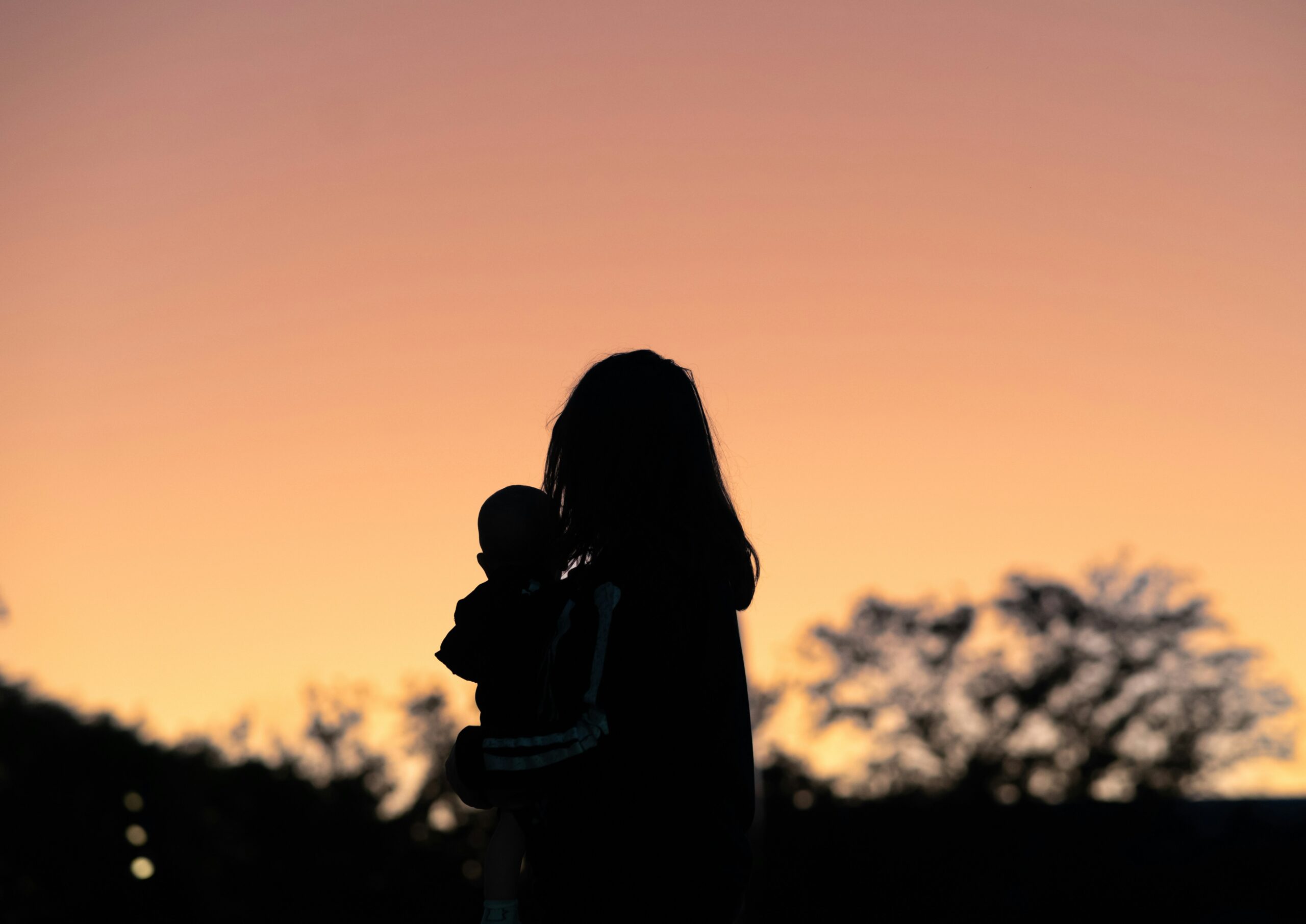
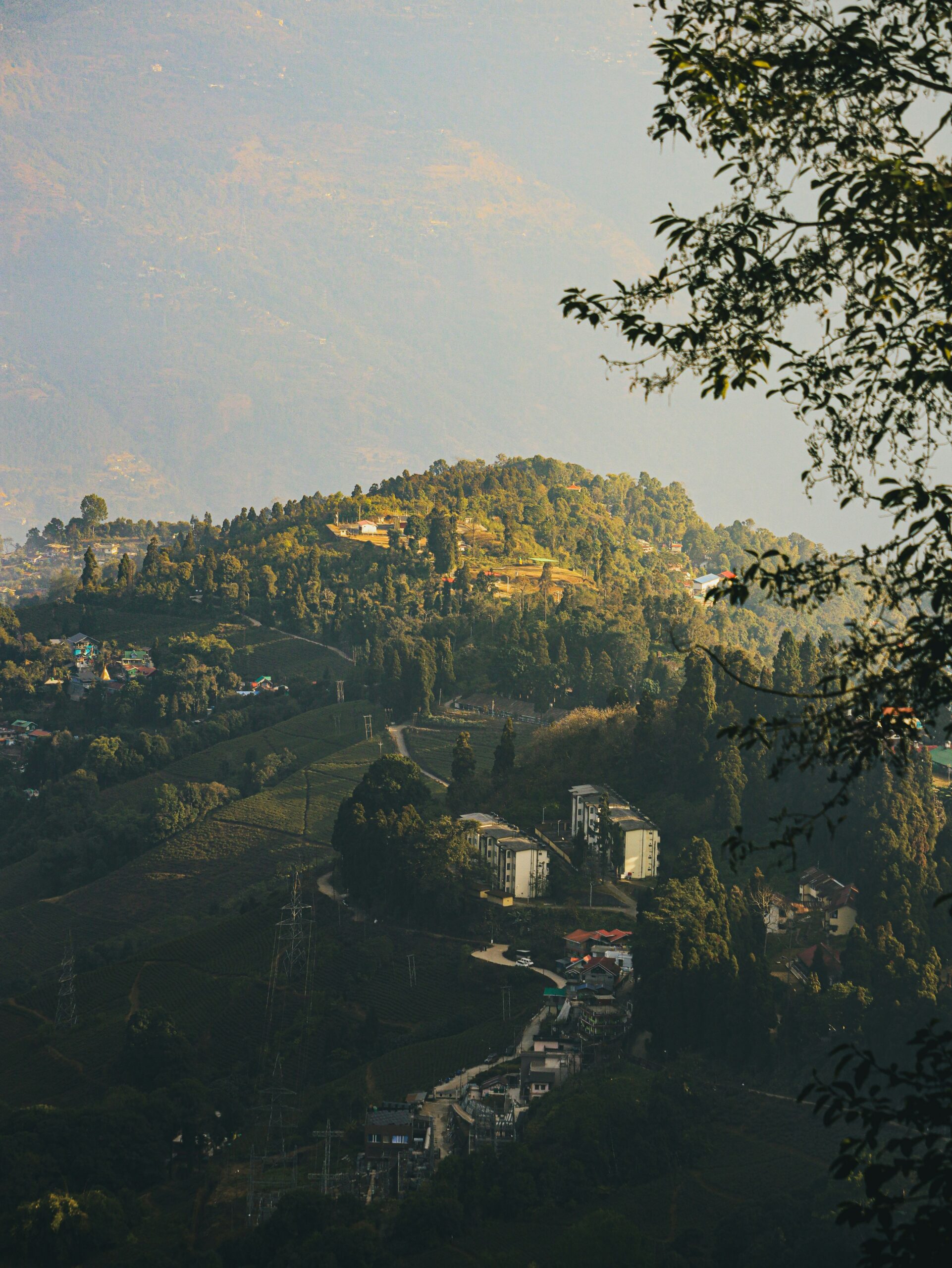
Photo by Anna Gutierrez on Unsplash
Find MeanPepperVine on Instagram @MeanPepperVine
Unusual story line. I liked it a lot. Happy the children remained with their families. And all the references that murukku and Mysore pak made the story come closer home
Wonderfully written by the author. All the best. Waiting for such worth reading stories.
Beautifully written, Really enjoyed reading this, I loved the flow and message
Nice plot. Well written. Enjoyed reading it.