| Runa Mukherjee Parikh | July 2026 | Flash Fiction |
The square tea box was a faded black in colour. Every time Nandini opened it, she could see the rust on the rim. Goodricke Castleton Vintage Darjeeling Tea was written right at the top along with a drawing of a castle that Nandini loved even as a child. The old box had definitely overstayed its welcome in the kitchen. But her Baba refused to part with it, just like her Ma had while she was still around.
Nandini didn’t mind either. So what if the box now contained the very popular Waghbakri tea granules, a far cry from its original contents? As far as she understood, tea was the one friend she and her parents shared. Tea knew her Ma as intimately as it knew her. Whether it was the regal first flush of Darjeeling or the mass favourite granules, tea was tea.
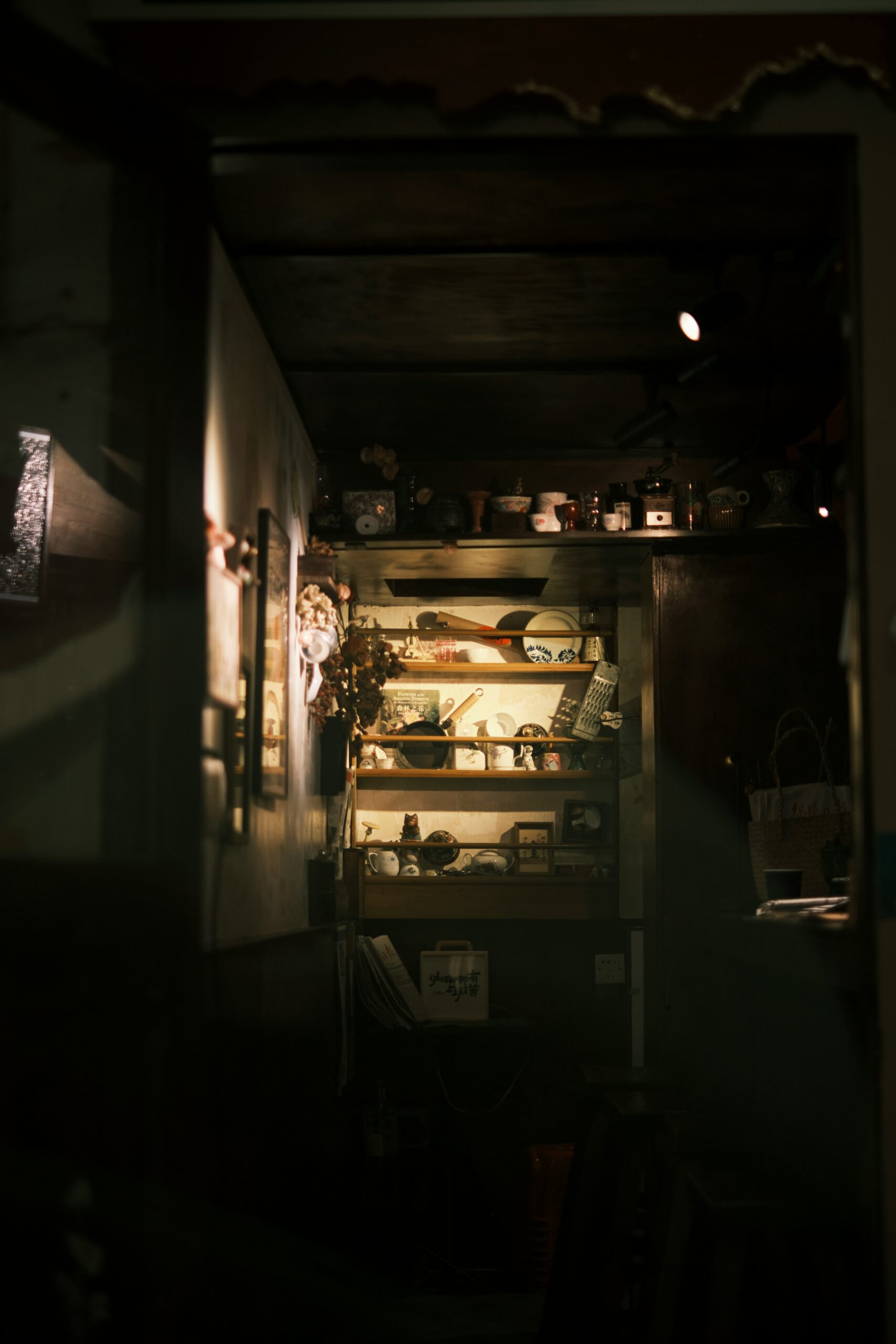
As the thirty-five-year-old walked out of the kitchen with a cup of tea in her hand, her eyes fell on the tiny idols of Saraswati and Lakshmi inside the glass cabinet on the wall across. Idols with big personalities, Nandini remembered them from a time they were a part of her Ma’s thakurer aashon. She worshipped them along with the other idols of gods and goddesses daily.
Lakshmi, the goddess of wealth, and Saraswati, the goddess of wisdom and arts, a must-worship in every Bengali household, these particular idols were her Ma’s favourites. When her Baba was gifted this set by Lahiri Da from the printing press, Ma was beyond happy.
“Great taste, the man has,” she had beamed.
“Shajabo na, pujo korbo” (won’t put them up as décor, will worship them instead), she had declared to herself right away. And for the next decade or two, the two peaceful-looking goddesses had adorned her temple. Until one day, she wanted them out of the aashon and inside the glass cabinet.
After her cancer diagnosis, there was a brief time when Nandini’s Ma refused to communicate with her gods. She was angry and in pain. A few weeks into her anger, she had decided that she still wanted to do her daily puja, but not as ritualistically as she had before. So, she put a few of her favourite idols and frames inside the glass cabinet of the living room and started lighting incense there.
She told Baba, “From now on, you will give the puja at the aashon.” Knowing better than to argue with a woman he had known and loved for thirty years and who was now deeply hurting, Baba agreed. At two distinct spots in Nandini’s home, her parents started honouring their gods. One did it because he was instructed, the other did it because she could not give it up, even with all her unresolved anger.
Sipping her tea and looking at the tiny idols with melancholia, she heard her Baba say, “So, when have you decided to return to Bombay?”
“I haven’t yet,” Nandini replied.
“We must all start doing things again. This isn’t what she’d want.”
Nandini turned to look at her father properly for the first time in days. He was reading the day’s newspaper, his feet on the trusted table of many years. On it, lay three pine cones on a pink ceramic plate. The pink provided a soft contrast to the cones’ brown.
Her Ma had brought these cones from their trip to Sikkim many years back. During a trek to the hills, she had picked one up and tucked it in her husband’s pocket, much to his annoyance. “These aren’t flowers, what are you taking them for?” he had asked.
“These are better than flowers. You’ll see. These will last forever,” she had smiled and said. Later, she had picked two more.
Her Ma was right. The little pine cones had lasted almost forever.
Nandini’s mind wandered back to her Baba. He looked like he had turned a few years older in just two weeks. His handsome face was still as kind, only a little sadder now. Nandini said simply, “She’d want us to be here, at home, with each other.”
This home, with its old tea box, tiny goddesses, and sturdy pine cones freely picked from nature, was the only place her Ma had ever belonged to.
When Nandini had got admission in one of the good engineering colleges in Delhi, her Ma had rejected it. “There are excellent colleges here; choose one,” she had said and ended the matter altogether. And when Nandini had got a job in Bombay, her Ma had frowned for days. She simply couldn’t accept the fact that Nandini would build a life anyplace but here.
This was home. She was home.
Looking fondly at the sun-kissed house, her Baba said, “It’s a beautiful little thing, isn’t it? She made it so.”
Nandini smiled. She knew exactly what he meant.
“Stay, shona. Stay a little longer…” her father said lovingly.
The world outside would have to wait.
Footnotes:
Thakurer aashon – a small temple for worship and prayer at home
Puja/pujo – worship
Da – elder brother
Shona – dear (child)
_________________________

Runa Mukherjee Parikh is an Indian journalist with 20 years of experience across mediums. With a degree in Journalism from Delhi University, she has written for several news organisations like the Times of India, India Today, Mint, Hindu Business Line and The Quint among others, on subjects like gender, climate, sustainability, pop culture, art and cinema.
Her essays have been regularly featured in reputed websites like The Swaddle and Arre, and she contributes to the Scholastic Yearbook annually. In 2017, she published a book of short stories on new-age relationships titled ‘Your Truth, My Truth’, and in 2021, Runa made an award-winning documentary on the idol makers of Calcutta during the pandemic titled ‘Maa toh Ashbei’ (Mother will Arrive).
_________________________
Photo by Haonan Wei on Unsplash
Find MeanPepperVine on Instagram @MeanPepperVine