| Salini Vineeth | January 2026 | Short Story Excerpt |
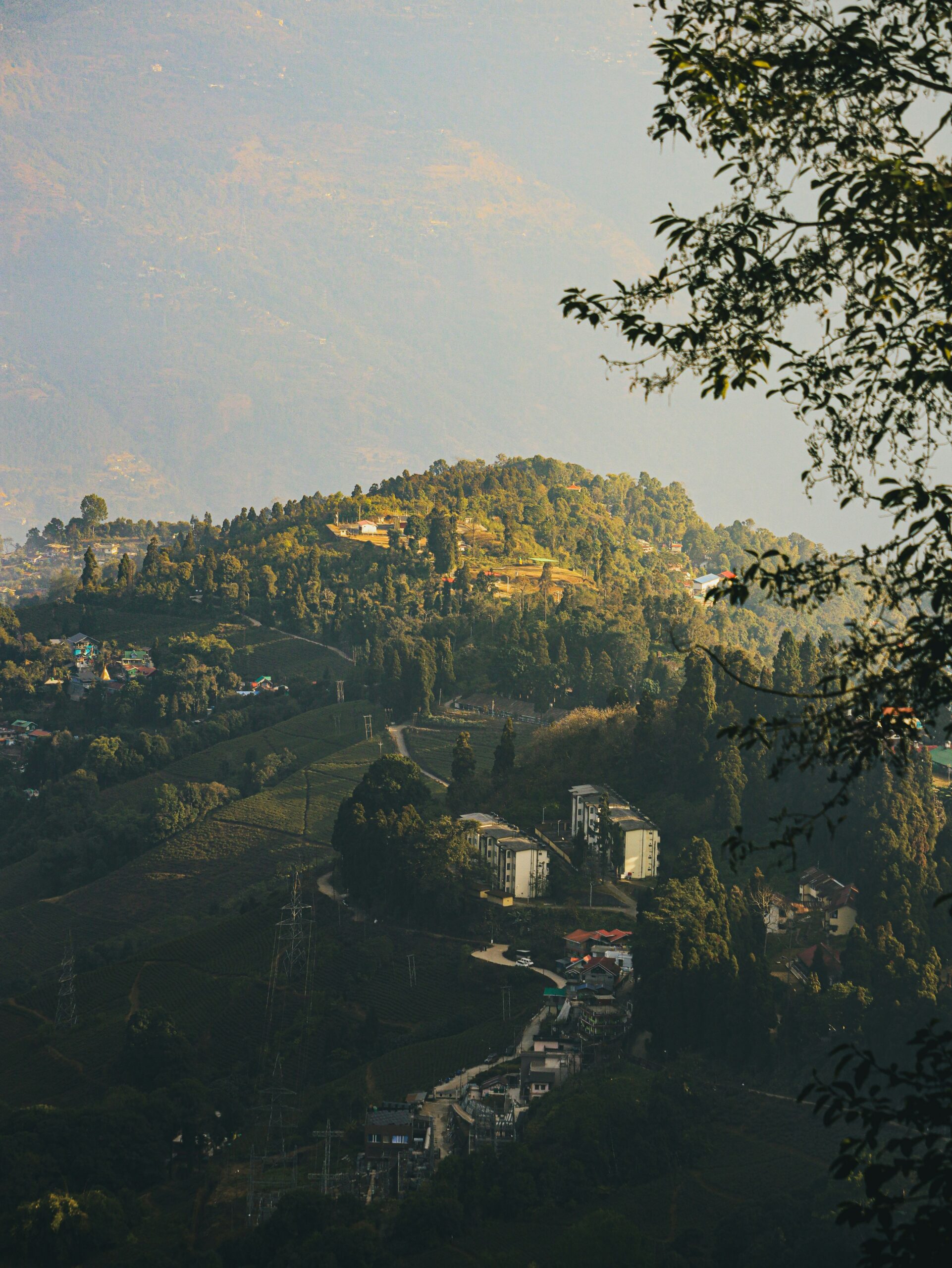
Hundreds of years ago, our village was a green paradise. The soil was rich and moist. The generous earth gave back everything we sowed tenfold. On one side of the village, paddy fields laden with golden grains awaited the harvest season. On the other, millet and sugarcane fields stretched across as far as the eye could see. Golden cucumbers, yard-long beans, snake gourds and enormous pumpkins grew on common vegetable patches. Coconut trees lined the village boundary like sturdy gatekeepers. The sun was gentle throughout the day, caressing the plants and animals with its soft rays. The monsoons never failed. Our wells brimmed with sweet water, and the river gushed through the gorge, effervescent, like a young girl’s heart.
People and nature lived in perfect harmony, respecting each other’s boundaries and taking from each other what was absolutely necessary. The villagers didn’t own land. They lived in an ooru, a hamlet on the riverbank. Their thatched huts lay open to all, and so did their hearts. Together, they sowed the seeds and toiled in the fields. Oh! The heaps of harvested paddy and millet looked like mountains. The village’s wealth accumulated like a beehive swelling with honey in spring.
Everyone was content except for a couple. Maaran and Marutha, the founding parents of our family.
‘What if the rain fails? What if the granaries turn empty?’ Maaran asked Marutha.
‘We work harder than the others, we deserve better. I want more food, a bigger hut. I want more. Mooore,’ Marutha hissed.
Day by day, the thought infested their brains like the polla plant that slowly sucked the life out of a tree. They no longer enjoyed the village’s bounty. They trudged through their days, gritting their teeth, mumbling and grumbling.
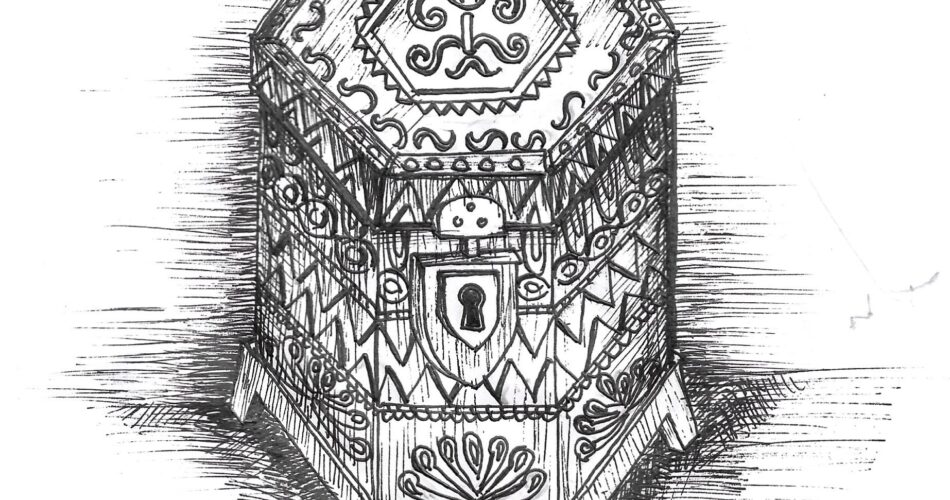
Then, a strange dream invaded their sleep. In their dream, they saw a nidhi, a golden treasure chest. When they were about to open the treasure chest, they woke up with a jolt. They thought about the nidhi all day long and dreamed about it all night.
Under the cover of a moonless night, they crossed the village border and set out in search of a sorcerer who could interpret dreams. For many days, Maaran and Marutha wandered through the jungle till they finally found the sorcerer.
‘A dream? A treasure? Oh! You’ve come to the right place.’ The sorcerer rubbed his palms together; his eyes twinkled. He picked up a betel leaf from his paan dan and opened a small silver tub containing pathaala mashi, the magical ink that can reveal hidden treasures. He dipped his middle finger into the tub and scooped out a bit of the jet-black ink. He then smeared the ink onto the betel leaf in a neat circle.
‘Om kreem hreem, kuru heem futt swaha!’ He gazed at the black circle, and his lips moved faster and faster. A few seconds passed. His eyes widened, and they acquired a demonic glow. He started shivering as if possessed by a spirit.
‘I see it, deep in the earth, right under your hut. But it’s not a treasure,’ he said.
‘But we saw a nidhi in our dreams, a golden treasure chest,’ Maaran and Marutha said in unison.
The sorcerer squinted at the betel leaf; his face furrowed. ‘I see Karivalli Chathan. I see his anger, shut in a golden chest, buried. Snarling, writhing, struggling to escape.’
‘Karivalli Chathan? We have never heard of that name,’ Maaran said.
So, the sorcerer told them the story of Karivalli Chathan and the Karuppa tribe, the ancient inhabitants of our village. It’s a story from a thousand years ago. Karivalli Chathan was the Karuppa tribe’s paradevatha, their village deity. Chathan protected the village from wild animals and natural calamities. But, as time passed, the tribe strayed to other gods and stopped worshipping Karivalli Chathan, making the demigod furious. His anger raged through the village like wildfire. It burnt humans and animals, set trees on fire, and scorched laden fields. The elders got together and begged for Chathan’s forgiveness. Chathan was ferocious and all-powerful, but he had one weakness; he could never deny the prayers of his devotees. Now, Chathan was in a dilemma. He had commanded his anger to destroy the village. The order was given, and even Chathan couldn’t take it back. So, he tricked his anger into a golden chest, cast a spell on it, and buried it deep in the riverbank.
He instructed the villagers never to dig up the golden chest. If they ever did, the anger would continue its quest and destroy the whole village. The tribe agreed to Chathan’s conditions. As centuries passed, other tribes migrated to the village. The customs and rituals of the Karuppa tribe vanished. Along with them, Karivalli Chathan was also forgotten.
‘For thousands of years, Karivalli Chathan’s anger has been trying to escape. Lying under your home, it’s plaguing your dreams, tempting your greed. Dig it up, you’ll become rich, but I must warn you—’ the sorcerer paused for a second.
‘So, we will be rich if we dig up the golden chest.’ Maaran and Marutha whispered to each other, their eyes glittering. They didn’t hear what the sorcerer said next; they were already on their way home.
Back in their village, Maaran and Marutha entered their hut, shut the door behind them, and started digging up their home. They kept digging and digging, with no sign of the treasure. The neighbours were curious. They peeped through the pinholes in the hut’s palmyra mat walls. From a dark pit in the centre of the hut, two pairs of eyes, burning like coal, stared back at them. Terrified, they ran away.
Centuries passed. Generations were born. Generations died. Maaran and Marutha kept digging, fuelled by their greed. The pit turned into a well and grew deep into the womb of the earth, like an infinite rabbit hole. Their house had long crumbled. Their skin assumed the redness of the earth. Their nails grew and gnarled like the branches of an old tree. Their bodies shrivelled. As they went further down, the air became thinner and thinner, and they stopped breathing.
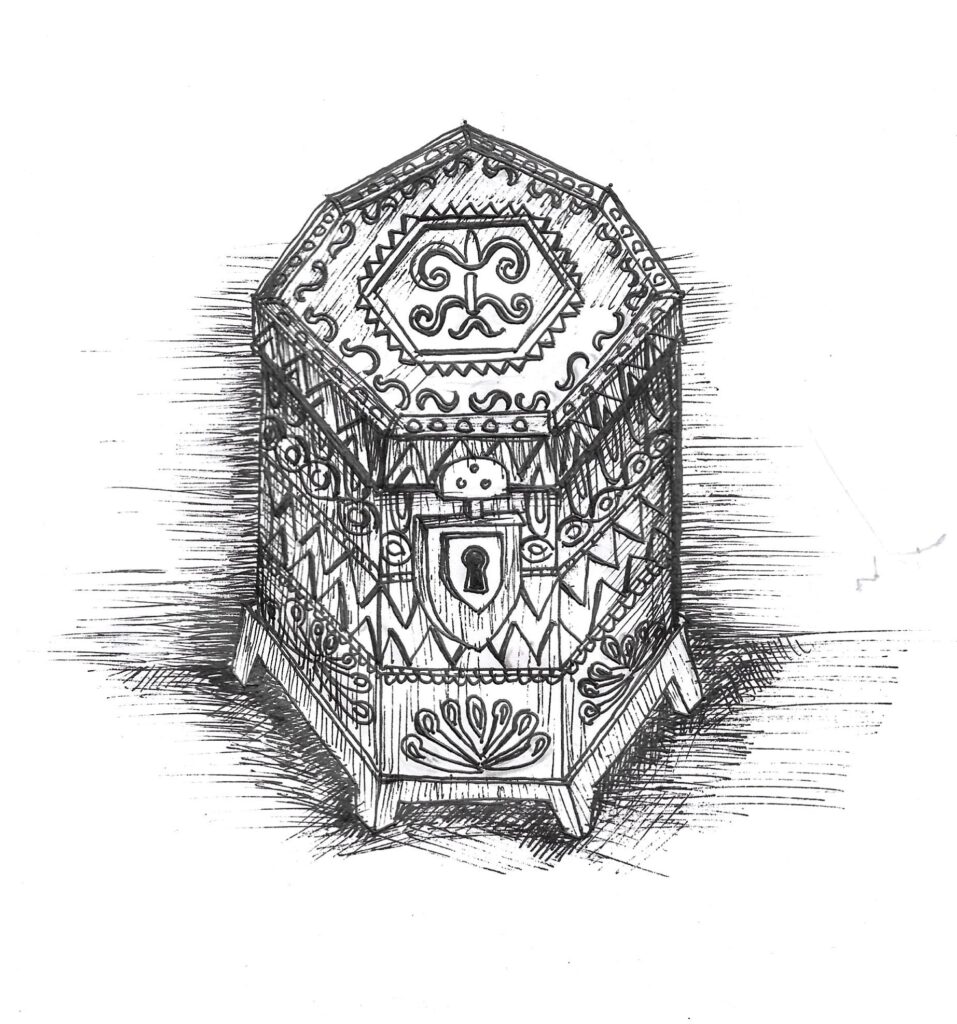
Finally, one day, their shovels clinked against metal. Maaran and Marutha, now two red blobs of soil, jumped up and down in joy. They gently removed the earth, and the golden chest emerged. They tried to break its lock, but in vain. Then they heard a rumbling noise. Red sand rose in a whirlwind inside the well and blurred their vision. When it subsided, a boy, hardly ten years old, riding a bull, manifested in front of them. His skin was as red as theirs, and his eyes were like pomegranate arils. He held a baton in one hand and an udukku, a drum, in the other.
‘Karivalli Chathan!’ Maaran and Marutha fell at the feet of the forgotten demigod.
‘You know me. Good. I am pleased with your perseverance. But, do you know what you’re about to set free? Do you know it will destroy your village?’ Chathan asked.
‘Yes, yes. But we have spent our whole lives digging for this treasure. We want our reward. We are your devotees, and we know you can’t say no to us. Please grant our wish.’
‘You have sought and found the golden chest, and it’s rightfully yours. I’ll help you open it, but before I do, be warned. My anger was wounded. For thousands of years, it has been brewing in the bitter potion of indignation. Once free, it will take revenge for my treachery. I am a forgotten God, and I’ve resigned to my fate. But my anger will not stop until it finishes what it had started. It will annihilate your beautiful village and its inhabitants.’
‘What about us? Will it harm us?’ Maaran asked.
‘My anger is loyal and grateful. It will reward you for setting it free. You alone will prosper in this land. You’ll have riches and power, and your descendants will rule the village. But, whatever you’re about to set free will become the master of your life. You and your descendants will serve it. If you ever abandon it, misery will fall upon your family. My anger won’t spare a single person in your bloodline. But now, you have a choice. You can choose not to open this chest. I will restore your youth and send you back in time,’ the Chathan said.
‘No, no. We want to see what’s inside the golden chest. We promise to serve it forever.’
‘If that’s your wish, I command the chest to be open.’ Karivalli Chathan started playing his udukku. A deafening thud echoed inside the well. Unable to stand the noise, Maaran and Marutha fainted.
When they came back to their senses, everything was silent. Chathan’s udukku and baton lay on the ground, but there was no trace of the demigod. The lock on the chest had broken into a thousand pieces. Maaran and Marutha huddled over the chest, their knees wobbling, their hearts beating like drums. They touched the golden lid. It was stone cold. They opened the lid and peered into the golden chest. There was no furious demon waiting to swallow them. Instead, a small, oval seed was nestled in a piece of red silk in the centre of the chest.
Excerpted with the author’s permission from The Tree, the Well & the Drag Queen, Salini Vineeth, Red River Story, 2026.
_________________________

Salini Vineeth is a fiction writer and translator based in Bangalore. She worked for ten years as an engineer before turning to full-time writing. Her latest novella, The Tree, The Well & The Drag Queen, was published by Red River Story in January 2026. She has also published five other books – Lost Edges (novel), Magic Square (novella), Everyday People (short story collection), and travel guides for Hampi and Badami. She is the fiction editor of Mean Pepper Vine. Her stories have appeared in magazines like Out of Print, Flash Fiction Magazine, The Bangalore Review, Cafe Dissensus, Kitaab International, and The Bombay Review.
_________________________
Illustration by Saranya S
Find MeanPepperVine on Instagram @MeanPepperVine